Ceramic coating vs wax vs sealant comes down to one question: how long do you want your protection to last, and what do you need it to survive? Wax lasts 4–8 weeks, paint sealants last 4–6 months, and a professionally applied ceramic coating lasts 2–5+ years, and in Vancouver's winter, that gap gets wider, not smaller. Our coastal winters don't hit paint with deep-freeze cold; they hit it with five months of near-constant rain, mineral-heavy water spotting, road brine on every highway, cedar and pine sap, and the kind of damp that breaks down organic wax in weeks instead of months. In this guide, our Vancouver mobile detailing team breaks down what each product actually is, how each one holds up against Vancouver-specific conditions, what the real cost per year looks like, and which option makes sense for your vehicle, whether it's a daily driver parked outside in Burnaby or a weekend car that hides in a garage all winter.
Quick Summary: Paint Protection in a Vancouver Winter
- ·Wax: 4–8 weeks in ideal conditions, often less in a Lower Mainland winter, where constant rain and road spray strip organic wax fast. Cheap upfront, but you'd need to reapply 4–6 times to get through October–March.
- ·Sealant: 4–6 months. A synthetic polymer that genuinely can survive one full Vancouver winter on a single application if applied in early fall. The budget sweet spot.
- ·Ceramic coating: 2–5+ years. Chemically bonds to your clear coat, resists road brine, UV, sap, and etching, and makes winter washing dramatically easier. Higher cost upfront, lowest cost per year of protection.
- ·The Vancouver factor: Our winters are wet, not just cold. Water behavior, beading, sheeting, and spot resistance, matters more here than almost anywhere in Canada, and it's exactly where ceramic pulls furthest ahead.
The Quick Comparison
| Carnauba / Synthetic Wax | Paint Sealant | Ceramic Coating | |
|---|---|---|---|
| What it is | Organic wax layer sitting on top of paint | Synthetic polymer layer bonded lightly to paint | Nano-ceramic (SiO2) layer chemically bonded to clear coat |
| Lasts | 4–8 weeks | 4–6 months | 2–5+ years |
| Survives one Vancouver winter? | No: 3–5 reapplications needed | Yes, one application (applied in fall) | Yes: multiple winters |
| Road brine & salt resistance | Poor | Moderate | Strong |
| Water spotting resistance | Poor | Moderate | Strong (spots stay surface-level) |
| Sap & bird dropping resistance | Poor | Moderate | Strong |
| Gloss | Warm, classic glow | Bright, slick | Deepest, glass-like |
| Prep required | Minimal | Light | Full decontamination + paint correction |
| Upfront cost | $ | $$ | $$$ |
| Cost per year of protection | Highest | Middle | Lowest |
What Each Product Actually Is
Traditional Car Wax
Wax is the classic: carnauba or synthetic paraffin compounds that sit on top of your clear coat. It produces that warm, wet-looking glow enthusiasts love, and it makes water bead, for a while. The catch is that wax is organic, and organic compounds break down under UV, heat, detergent, and constant moisture. In a dry climate, a good wax might stretch toward two months. In a Lower Mainland winter, where your paint is wet more days than it's dry and every highway drive coats it in road spray, wax degrades noticeably faster. Protection against actual damage, brine, etching, UV, is minimal; wax primarily makes water behave nicely and paint look good.
Paint Sealant
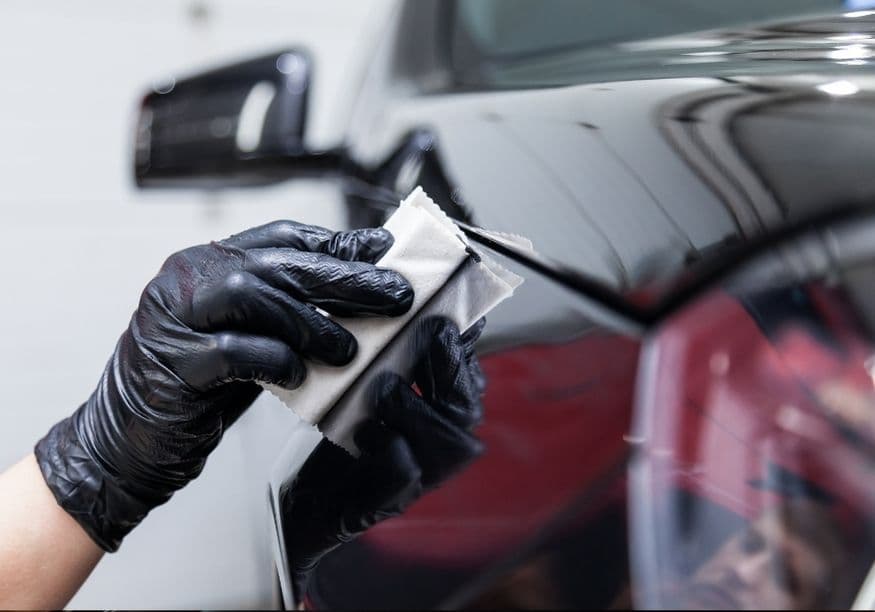
Sealants are what wax grew up into: fully synthetic, polymer-based protectants that bond more tenaciously to paint and resist UV and chemical breakdown far better than organic wax. A quality sealant applied to clean paint in September or October can genuinely make it through to spring on one application, which is why sealants have long been the practical choice for Vancouver daily drivers on a budget. Gloss is bright and slick rather than warm, and application is forgiving enough for a driveway job. What a sealant still can't do is provide real hardness or long-term chemical resistance; it's a better raincoat, not armour.
Ceramic Coating
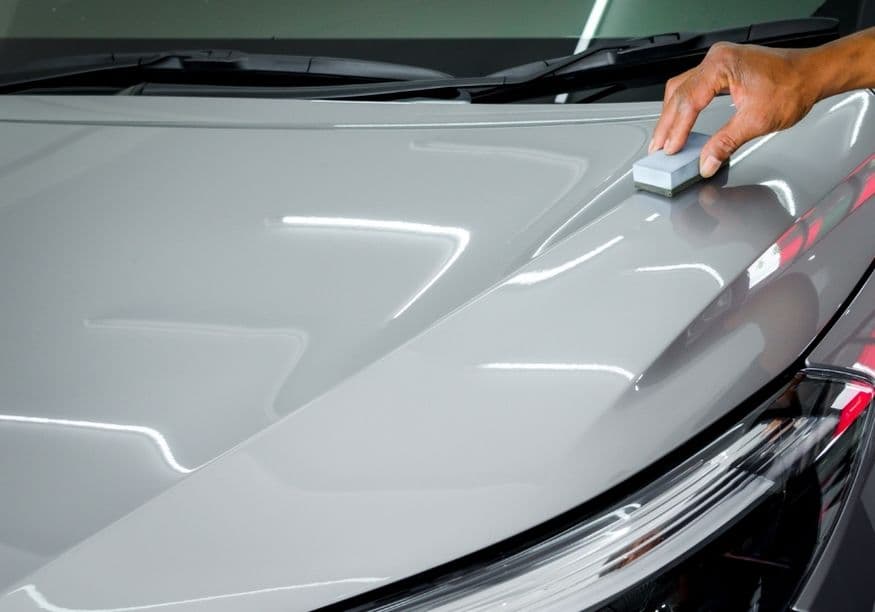
Ceramic coating is a different technology entirely, not a stronger wax. It's a liquid suspension of ceramic nanoparticles, primarily SiO2, that chemically bonds to your clear coat and cures into a hard, glass-like layer that effectively becomes part of the paint surface. It doesn't wash off; it only leaves through years of gradual abrasion or deliberate machine polishing. That bond is what buys you 2–5+ years of durability, genuinely strong chemical resistance (brine, sap, bird droppings, industrial fallout), dedicated UV protection, and the extreme hydrophobic beading that ceramic is famous for. The trade-offs are real: it demands full decontamination and usually paint correction before application (the coating locks in whatever finish is underneath it, flaws included), it needs 24–48 hours to cure, and it costs meaningfully more upfront.
The Vancouver Winter Test: What Your Paint Is Actually Up Against
National comparison articles talk about "harsh winters" and mean minus-30 and gravel. The Lower Mainland is a different animal, and it punishes paint in its own specific ways.
Relentless wet. From November through March, a vehicle parked outside in Metro Vancouver is wet most of the time. Constant moisture accelerates the breakdown of organic wax dramatically and keeps contaminants, brine film, traffic grime, organic debris, in prolonged contact with your paint. Protection that survives dry cold does not automatically survive five months of rain.
Mineral water spotting. Rain picks up minerals and pollutants, and when it dries on unprotected paint, especially on dark vehicles, it leaves spots that can etch into the clear coat over time. On waxed paint, spotting reaches the surface within weeks as the wax fails. On ceramic, spots that do form sit on the coating rather than etching the clear coat underneath, and they wash off instead of requiring polishing.
Road brine, not just salt. The highways in and out of Vancouver are treated heavily with liquid brine and salt through winter, and anyone who's driven the Coquihalla, Highway 1, or the Sea to Sky in December knows the grey film that coats the entire vehicle by the time you arrive. Brine is chemically aggressive, it creeps into every seam, and it stays on the paint until it's washed off. Wax offers almost no resistance to it. Ceramic's hard, chemically inert layer prevents brine from bonding to or attacking the clear coat, and it rinses away far more easily.
Sap, needles, and organic fallout. Parking under Vancouver's cedars and pines means sap, needle debris, and in shaded spots, the beginnings of green algae film by late winter. Tree sap bonds aggressively to bare or waxed paint and often needs solvents to remove; on a ceramic-coated surface, it releases with far less drama, and organic film struggles to establish on the slick surface.
Freeze-thaw mornings. The Lower Mainland hovers around freezing all winter, and rain becomes ice overnight, then melts by 10 a.m. Scraping and de-icing on unprotected paint invites micro-marring; a hard ceramic layer takes that abuse better than a soft wax film ever will.
Durability in Vancouver Conditions: The Honest Numbers
| Product | Manufacturer claim | Realistic Vancouver winter lifespan | Applications to cover Oct–Mar |
|---|---|---|---|
| Carnauba wax | 6–8 weeks | 3–5 weeks | 4–6 |
| Synthetic wax | ~2 months | 4–6 weeks | 3–5 |
| Paint sealant | 4–6 months | 4–5 months | 1 (applied early fall) |
| Consumer spray ceramic | 6–12 months | 4–8 months | 1–2 |
| Professional ceramic coating | 2–9 years (by tier) | 2–5+ years | 0: already protected |
A note on that last row: marketing for ceramic coatings ranges from honest to fantastical. Real-world durability depends on the product tier, the quality of the prep, and how the vehicle is washed. A professionally applied mid-tier coating on properly corrected paint, maintained with gentle pH-neutral washing, reliably delivers multiple years, and that's the claim worth trusting, not the "9-year miracle" version.
What It Actually Costs Per Year
Upfront price is where wax wins and ceramic loses. Amortized over time, the picture flips.
| Wax | Sealant | Professional Ceramic | |
|---|---|---|---|
| Upfront cost | $20–50 product (DIY) or ~$80–150/application (pro) | $30–60 product or ~$100–200/application | Typically $600–1,500+ depending on tier & paint condition |
| Applications over 3 years | 18–24 (DIY labour: yours) | 6–9 | 1 |
| Realistic 3-year outlay | $400–1,000+ in product/labour + your weekends | $300–900 | One upfront cost |
| Cost per protected year | Highest | Middle | Lowest |
| Hidden savings | — | — | Faster, easier washes; no seasonal reapplication; paint preserved for resale |
The other line item people forget: washing time. A ceramic-coated vehicle in winter rinses clean in a fraction of the time because brine and grime can't bond to the surface. Over a five-month wet season of regular salt-removal washes, that adds up to real hours.
DIY vs Professional: Where Each Makes Sense
Wax and sealant are legitimately DIY-friendly. If you enjoy the ritual, a fall sealant application on clean, decontaminated paint is a genuinely effective winter prep any careful owner can do in a driveway.
Ceramic coating is a different story. The coating locks in whatever's underneath it, swirls, water-spot etching, oxidation, permanently, until the coating is machine-polished off. That's why professional application starts with full decontamination, clay bar, and paint correction under proper lighting before any coating touches the paint, followed by controlled application and cure. Consumer spray ceramics exist and are fine as sealant-upgrades, but they are not the multi-year bonded coating; treating a $30 spray like a $1,000 install leads to disappointment. If you're paying for real ceramic, the prep is most of what you're paying for, and it's the part that determines whether the coating lasts two years or five.
What we see in the field: the most common ceramic problem that comes through our doors isn't coating failure: it's coatings applied over uncorrected or poorly prepped paint, usually from a cut-rate job. The coating did its job; it just preserved the swirl marks underneath in high definition. Prep first, coat second. There's no shortcut that survives contact with a Vancouver winter.
So Which Should You Choose?
Choose wax if your car lives in a garage, gets driven occasionally, and you genuinely enjoy detailing as a hobby. For a pampered weekend car, the warm carnauba glow is still lovely, just don't expect it to defend a daily driver through a Vancouver winter.
Choose a sealant if you want real, budget-friendly winter protection and don't mind one dedicated prep-and-apply session every fall. For an older daily driver or a lease you're returning, a quality sealant applied in October is honest value.
Choose a ceramic coating if you're keeping the vehicle for years, it lives outside or racks up highway kilometres through brine season, you drive a dark colour that shows every water spot, or you simply want the easiest possible maintenance: the strongest beading, the fastest washes, and paint that still looks corrected at resale. Amortized over its lifespan, it's the cheapest protection per year, and it's the only option on this list that treats a Vancouver winter as a minor inconvenience rather than a five-month siege.
And for completeness: none of these, wax, sealant, or ceramic, stops rock chips. That's paint protection film's job. Ceramic protects against chemistry and UV; PPF protects against physics. On high-impact zones like the front bumper and hood, the two together are the full-armour answer.
FAQ
Is ceramic coating better than wax for winter?
For protection and durability, yes: decisively. Ceramic resists road brine, water spotting, and UV for years, while wax offers weeks of mostly cosmetic protection and breaks down quickly in constant wet. Wax still wins on upfront cost and the classic warm look.
Can a sealant really last a whole Vancouver winter?
A quality synthetic sealant applied to clean, decontaminated paint in early fall will generally hold through to spring: 4–5 realistic months. It's the best single-application budget option for October-to-March protection.
Does ceramic coating stop water spots completely?
No: mineral-laden water can still leave spots if it dries on the surface. The difference is that on ceramic, spots sit on the coating and wash off, instead of etching into your clear coat the way they can on unprotected or waxed paint.
Can I put wax over a ceramic coating?
You can, but it's usually pointless: the wax masks the coating's superior beading and wears off in weeks. A coating-specific topper or maintenance spray is the right way to refresh a ceramic's hydrophobics.
How should I wash a coated car in winter?
Gentle hand washing or touchless with pH-neutral soap, rinsing brine off regularly, and avoiding automatic brush washes and harsh degreasers, which shorten any protection's life, ceramic included.
Final Thoughts
Wax, sealant, and ceramic aren't three grades of the same thing: they're three different technologies with three very different relationships to a Vancouver winter. Wax is a look, a sealant is a season, and a ceramic coating is a multi-year decision that pays for itself in survived brine, avoided etching, and Saturday mornings not spent re-waxing in the cold.
If you're weighing it for your own vehicle, our ceramic coating in Vancouver page breaks down our packages, honest durability tiers, and pricing, including what proper prep involves and why we insist on it. Or start with a full mobile detail and go from there. Not sure which tier your paint needs? Send us a couple of photos and we'll tell you straight, even if the answer is "a sealant is all you need this year."