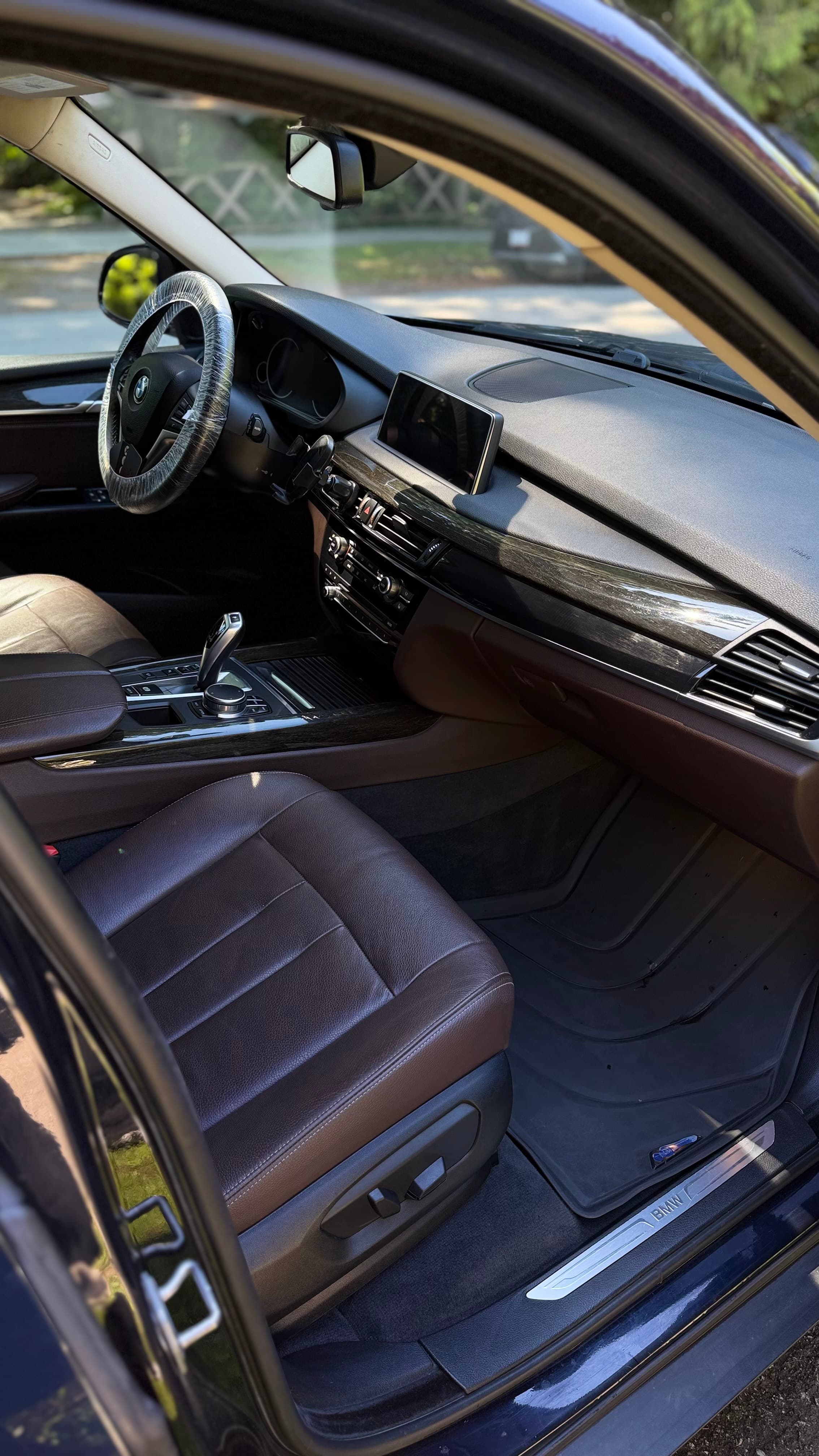
Here's the Maple Ridge winter routine. You get in with a wet coat and wet boots, the windows fog instantly, you put the heated seat on three and the blower on full, and within ten minutes the cabin is warm and dry.
Repeat that twice a day for four months and you've put your leather through about two hundred and forty wet-to-hot cycles. That's what actually ages automotive leather in this climate — not the cold, not the damp, but the swing between them.
This post covers what that cycling does to the hide, a five-minute check you can do in your driveway, and an honest account of what a leather coating protects against and what it doesn't. Up front: we clean, condition and protect leather. We don't re-dye it and we don't repair cracks — once the finish has failed, that's a trim specialist.
What's Actually Happening
Your cabin is humid all winter. Wet boots, wet coats, breath, snow melting off the door sills. There's more moisture in a Metro Vancouver car between November and March than at any other time of year.
Leather takes that moisture up. Automotive leather is pigmented and finished rather than bare, but the finish is a thin polymer layer and it isn't waterproof — especially once it's worn, and especially through perforations.
Then the heating element drives it back out fast. The element sits directly under the cushion and heats the hide from below. Damp leather heated quickly loses moisture rapidly, and it's the repetition of that cycle — wet, hot, dry, wet again — that stiffens and embrittles leather over a few winters.
Perforated seats are worse. Heated and ventilated seats are perforated, and those holes let moisture, spilled drinks and body oils straight through the finish into the foam beneath. Once something's in the foam it doesn't come back out, and it tends to reappear as a smell.
Heating elements aren't evenly spread. They run in loops across the cushion, so some areas get hotter than others. Over years that shows up as uneven wear, sometimes following the pattern of the element itself.
Wet denim transfers dye. This is the most common winter complaint on light leather by a long way. Damp jeans against cream or beige seats move indigo into the finish, and the wetter the denim, the worse it goes.
Where It Shows Up
- The driver's bolster, which takes every entry and exit plus a wet coat sliding across it.
- The seat base, directly above the heating element and directly under you.
- Around the perforations, where darkening rings mean contamination has gone through.
- The steering wheel, from hands, winter hand cream and damp gloves — usually the first surface on any car to look tired.
- The armrest and door card, where a wet sleeve rests on every drive.
A Five-Minute Check
Five tests, two minutes, no products.
Press your palm flat on the seat base and hold it for ten seconds. Healthy leather warms under your hand and feels dry. Cool and slightly clammy means there's moisture held in the foam underneath.
Look at the perforations under a bright light. Dark rings around the holes mean oils and contamination have passed through the finish into the cushion.
Run a fingernail lightly across the driver's bolster. You're feeling for grain. Leather that's gone smooth and slightly shiny there has had the finish worn off it, and that's the point where it starts drying out properly.
Check light-coloured seats for a blue-grey cast on the base and lower backrest. That's denim dye, and it's much easier to remove in month two than in year two.
Leave the car closed overnight, then smell the seat directly. Not the carpet, the seat. Musty coming off the cushion means moisture is sitting in the foam.
Test 1 is the one people are surprised by. A seat can look perfect and still be holding water in the foam from a hundred wet mornings.
What You Can Do This Week
Stop putting the heated seat straight onto maximum. The lower settings get you warm nearly as fast and heat the hide far more gently. Going from cold and damp to full heat in thirty seconds is the harshest version of the cycle.
Take the wet coat off before you sit down, or at least don't sit on the tails of it. That's where most of the water goes into the seat.
Keep a towel in the car through winter. If you've sat down soaked, give the seat ten seconds when you get out rather than letting it sit damp under a cover of warm air.
Wipe the steering wheel weekly. Hands plus hand cream plus damp is the worst combination any interior surface deals with, and the wheel gets it every single drive.
Deal with dye transfer early. Fresh indigo on light leather lifts easily. Set-in indigo often doesn't fully come out at all.
All of that slows the ageing down. None of it restores a finish that's already worn through, and none of it pulls contamination back out of foam.
When It Needs a Professional
A regular wipe-down is enough when the leather feels supple, the grain is still there on the bolster, there's no dye transfer and the smell test comes back clean. Keep doing that and you'll be fine for years.
It needs cleaning and protection when there's denim transfer on light seats, when the bolster has gone smooth and dry, or when the perforations are darkening. That's a proper clean followed by a protective coating, and the order matters because anything applied over contamination seals it in.
It's past us. Leather that's cracked, split, or worn through to a different colour underneath has had the finish fail completely. No cleaner, conditioner or coating restores that — it's re-dyeing or re-trimming, and that's a specialist. We'll tell you which one you've got rather than sell you a coating that can't fix it.
What a Leather Coating Actually Does
Worth being precise here, because this is a product that gets oversold.
A leather coating is a protective layer bonded to the finish on top of your leather. It resists dye transfer, body oils and spills, it makes cleaning dramatically easier, and it slows UV damage on the surfaces that get sun.
What it doesn't do: it doesn't restore damaged leather, it doesn't fill cracks, it doesn't re-dye faded panels, and it doesn't reach moisture already sitting in the foam. It protects what you've got from here forward. It isn't a repair.
In practice the benefit most people actually notice is dye transfer. If you've got light leather and you wear jeans, that's the one that changes your life, and it's why most of the leather coatings we do are on cream and beige interiors.
What a Leather Coating Visit Does
We come to you in Maple Ridge — Albion, Silver Valley, Haney, Hammond, Websters Corners. Driveway, garage or office lot, and we bring water, equipment and lighting.
Every leather surface gets cleaned properly first, which on a winter car means lifting body oils and any dye transfer out of the grain before anything goes on top. Then the surfaces are allowed to dry, then the coating is applied by hand panel by panel and left to set with the doors shut.
| What you're seeing | Best fit |
|---|---|
| Leather supple, grain intact, nothing transferring | Wipe it weekly — you don't need us |
| Blue-grey denim transfer on light leather | Clean and leather coating |
| Bolster gone smooth and dry to the touch | Clean and leather coating |
| Dark rings around perforations, musty smell from the seat | Interior detail first, then coating |
| Cracked, split, or colour worn through to the base | Not us — leather re-dye or re-trim specialist |
Quick Answers
Does a leather coating stop leather cracking?
Not on its own. Cracking comes from the hide drying out and the finish failing. A coating protects the surface and reduces what gets into it, which helps — but it won't reverse damage that's already there.
Will a leather coating clog perforated heated seats?
Not if it's applied properly. Applied heavily or carelessly, a coating can bridge the perforation holes and block the ventilation, which is worth asking any installer about before booking.
Does a leather coating stop jean dye transfer?
It dramatically reduces it, and that's the benefit most customers notice first. Dye sits on the coating rather than going into the finish, so it wipes off instead of staining.
Can leather coating be done in winter?
Yes — it's interior work, so weather barely matters. The seats need to be dry before anything is applied, which in practice means a garage or a dry window.
Press your hand on the seat tonight — ten seconds, palm flat on the driver's seat base. If it comes back cool and slightly damp, the foam under there has been holding water since October and the heated seat has been cooking it out twice a day ever since.
Get in touch → We're mobile across Maple Ridge and the rest of Metro Vancouver. Call or text (778) 656-2947.