A full car detail takes 5 to 8 hours for most vehicles, roughly 5–6 hours for a sedan in average condition, 6–7 for an SUV or crossover, and 7–8 for a truck, van, or large three-row SUV. Interior-only details generally run 2.5–4.5 hours, exterior-only details 1.5–3.5 hours, and express details 1.5–2 hours. Vehicles with pet hair, set-in stains, heavy oxidation, or years without a professional clean can add another 2–4 hours on top. In Vancouver, the wet climate adds its own time cost: road brine, bonded contamination, and damp interiors mean local vehicles routinely take longer than dry-climate guides suggest. This guide breaks down realistic timing by service type and vehicle size, what makes a detail run long, why suspiciously fast quotes are a red flag, and how to prepare so your appointment doesn't stretch.
Quick Summary: Detailing Times at a Glance
- ·Express detail: 1.5–2 hours: maintenance clean, no decontamination or shampooing
- ·Exterior detail: 1.5–3.5 hours: wash, decontamination, protection
- ·Interior detail: 2.5–4.5 hours: vacuum, shampoo, extraction, conditioning
- ·Full detail: 5–8 hours: complete interior and exterior reconditioning
- ·Paint correction: 6–12+ hours, often spanning multiple days
- ·Ceramic coating (with prep): 1–3 days including correction and cure time
- ·The Vancouver factor: Winter brine, bonded road film, tree sap, and damp interiors regularly add 1–3 hours versus the same vehicle in a dry climate.
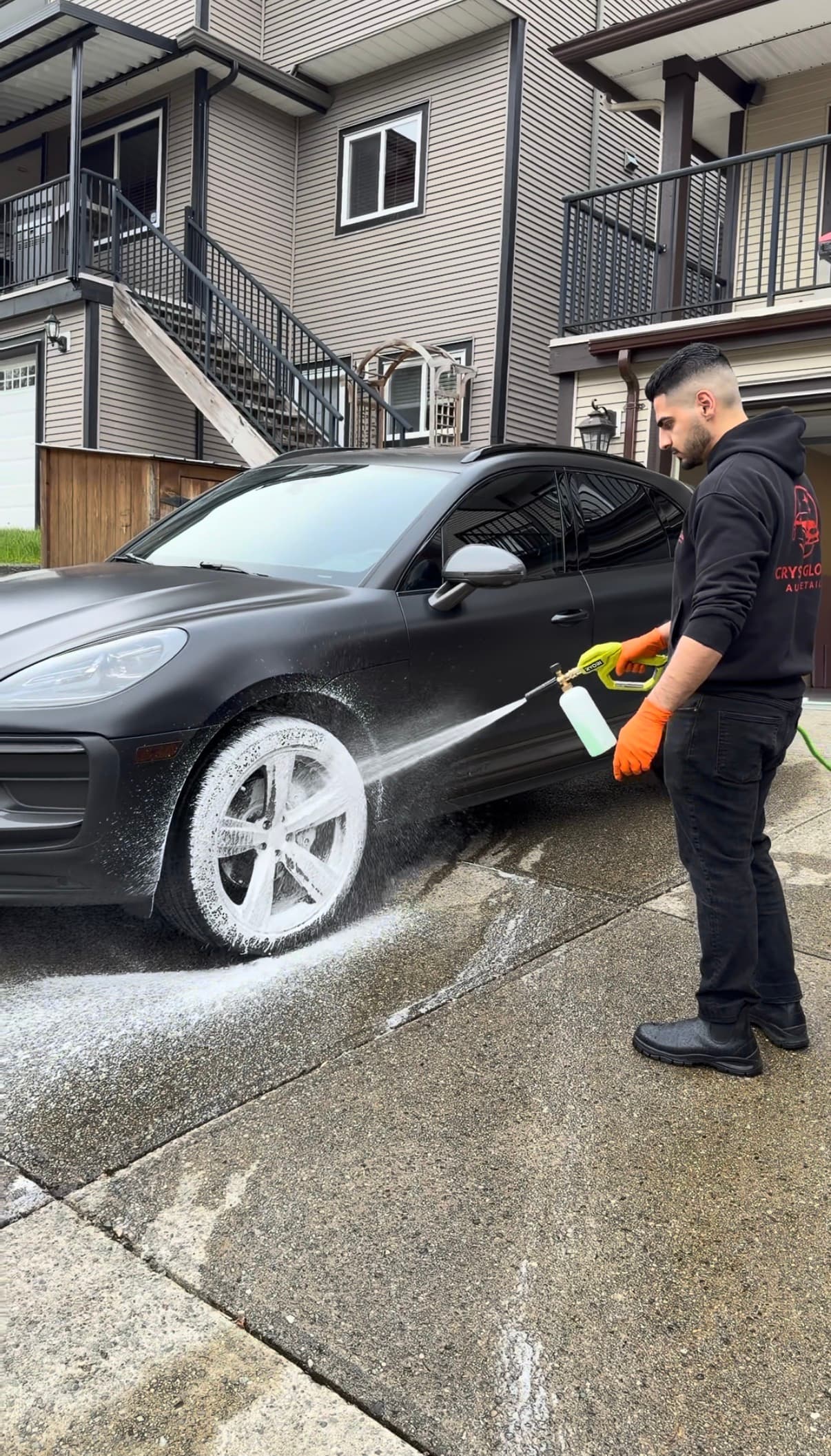
Detailing Time by Service Type
| Service | Typical Time | What's Involved |
|---|---|---|
| Express / maintenance detail | 1.5–2 hrs | Hand wash, vacuum, wipe-down, spray protection. No decontamination or shampooing. |
| Exterior detail | 1.5–3.5 hrs | Pre-wash, hand wash, wheels and tires, decontamination, glass, sealant or wax |
| Interior detail | 2.5–4.5 hrs | Vacuum and crevice work, upholstery and carpet shampoo, extraction, leather cleaning and conditioning, surfaces, glass |
| Full detail | 5–8 hrs | Complete interior and exterior reconditioning |
| Paint correction (one-step) | 4–6 hrs | Machine polishing to remove light swirls and defects |
| Paint correction (full multi-step) | 6–8 hrs | Multiple compounding and polishing stages for maximum safe correction |
| Ceramic coating with prep | 1–3 days | Decontamination, correction, application, plus 24–48 hr cure |
| Engine bay cleaning (add-on) | 45 min–1.5 hrs | Degreasing, cleaning, dressing |
| Headlight restoration (add-on) | 1–2 hrs | Wet sanding, polishing, resealing |
The pattern is straightforward: the more restoration involved beyond simple cleaning, the longer the job. Cleaning is fast. Correcting and protecting is slow.
Detailing Time by Vehicle Size
Surface area drives everything. A three-row SUV has roughly double the interior volume and significantly more paint, glass, and trim than a compact sedan.
| Vehicle | Exterior Detail | Interior Detail | Full Detail |
|---|---|---|---|
| Compact car | 1.5–2 hrs | 2–3 hrs | 4.5–5.5 hrs |
| Sedan | 1.5–2.5 hrs | 2.5–3.5 hrs | 5–6 hrs |
| Crossover / small SUV | 2–3 hrs | 3–4 hrs | 6–7 hrs |
| Full-size SUV / truck | 2.5–3.5 hrs | 4–5 hrs | 7–8 hrs |
| Van / three-row SUV | 3–4 hrs | 4.5–5.5 hrs | 8+ hrs |
Vehicle design matters too, not just size. Intricate wheel designs, complex grille work, textured plastic trim, deep interior crevices, and third-row seating configurations all add real time that a simple size category doesn't capture.
What Makes a Detail Take Longer
Condition is the single biggest variable. A vehicle detailed six months ago takes dramatically less time than one that's never been professionally cleaned. First-ever details on older vehicles routinely run 2–4 hours over the standard estimate, and honest shops will tell you that up front rather than discovering it mid-job.
Pet hair
This deserves its own section because it surprises people constantly. Hair genuinely woven into carpet and upholstery fibres can add two hours or more by itself, and it doesn't vacuum out and has to be worked out mechanically, section by section. If your dog rides in the car regularly, mention it when booking.
Set-in stains and odours
Standard shampooing is quick. Coffee, dye transfer, ink, and pet accidents that have penetrated into padding require targeted treatment and repeated extraction passes. Odour elimination through ozone or enzymatic treatment adds time on top of the detail itself, sometimes requiring the vehicle to sit sealed for a period.
Paint condition
Heavily contaminated paint means longer decontamination. Oxidation, swirls, and scratches mean correction, which is a different order of time investment entirely, measured in hours, not minutes. Our Vancouver mobile detailing team always assesses paint condition before quoting a time window so there are no mid-job surprises.
Add-ons and interior materials
Leather requires separate cleaning and conditioning steps with dwell time; cloth requires shampooing and extraction with drying time. Vehicles with both take longer than either alone. Engine bay, headlight restoration, ozone treatment, and trim restoration each stack onto the base time. Number of technicians matters too, as a two-person team can complete a full detail meaningfully faster than one person working alone, without cutting steps.
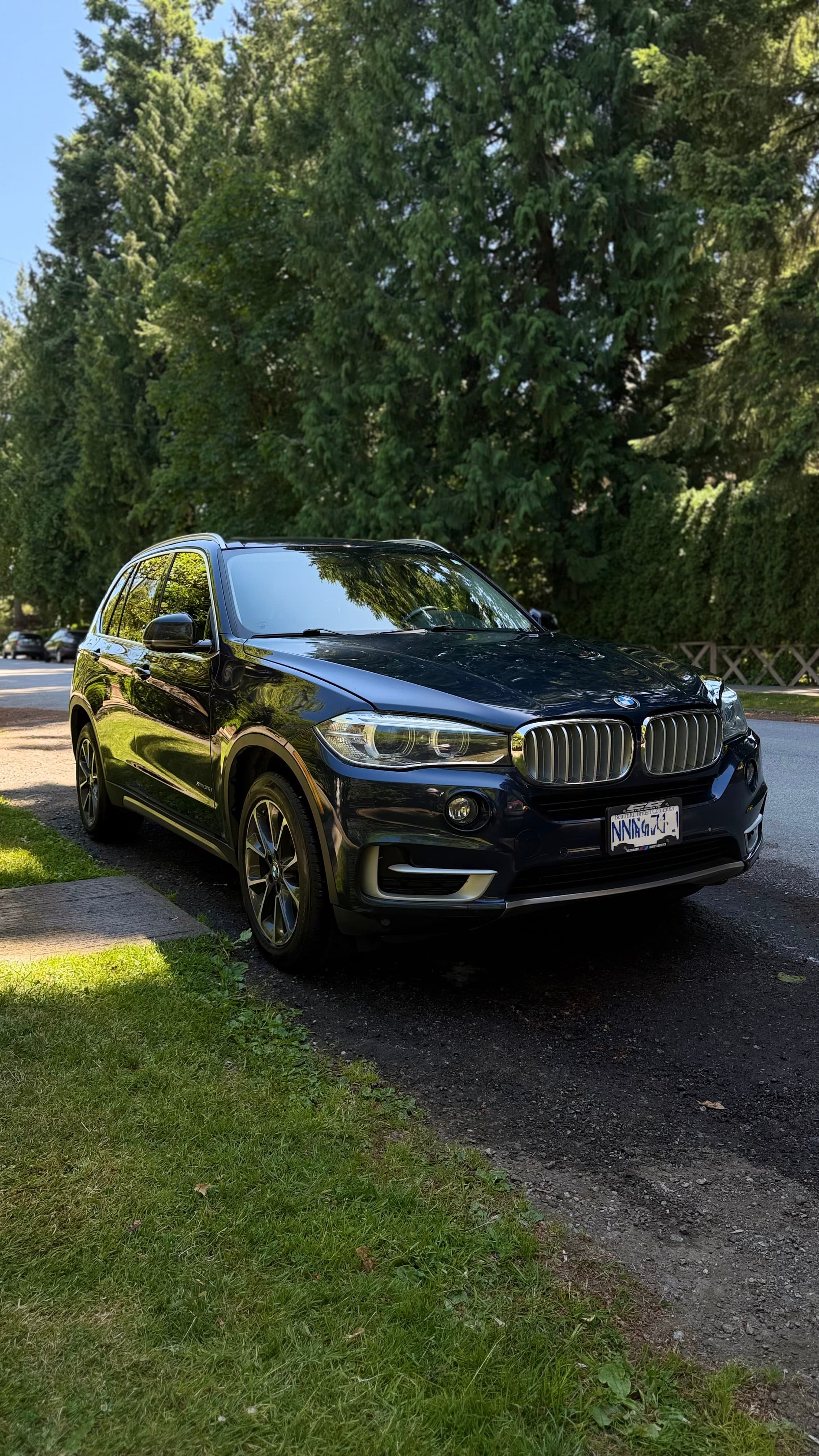
The Vancouver Factor: Why Local Details Run Longer
Most detailing time guides online are written for dry climates and quietly understate what Lower Mainland vehicles require.
Bonded contamination. Nine months of wet roads deposit brake dust and road film continuously. Decontamination on a Vancouver daily driver takes longer than the same step on a car from a dry city, because there's genuinely more bonded to the paint. Skipping it makes the job faster, which is exactly why cheap operators skip it.
Winter road brine. Highway 1, the Coquihalla, and the Sea to Sky coat vehicles in brine film from November through March. It works into seams, door jambs, wheel wells, and undercarriage areas, and removing it properly rather than just rinsing the panels adds time.
Tree sap and organic fallout. Cedars and firs mean sap, needle debris, and green film on shaded panels. Sap bonds aggressively and typically needs solvent treatment and careful removal, one of the most common reasons an exterior detail runs over in the Lower Mainland.
Damp interiors. Five months a year of wet boots, wet dogs, and wet gear puts moisture into carpet padding. Proper hot-water extraction, pulling the moisture back out rather than just shampooing the surface, takes longer than a quick shampoo, but it's what prevents a mildew smell three weeks later. This is the step most commonly abandoned when a shop is trying to hit a fast turnaround. Our interior detailing service always uses full hot-water extraction for exactly this reason.
Drying time in humidity. Shampooed carpets and upholstery simply take longer to dry in a damp coastal climate. That's physics, not inefficiency, and it's why a rushed winter interior detail can leave a vehicle smelling worse than it started.
Why "Fast" Is a Red Flag
Here's the honest arithmetic: it is not possible to shampoo carpets, extract them, allow drying, clean and condition leather, decontaminate paint, and apply and cure a sealant in ninety minutes. A "full detail" advertised as a 90-minute or same-hour service is an express clean wearing a premium label.
Each stage has a time floor that can't be compressed:
The stages that can't be rushed:
- ·Shampooed surfaces need drying time before the vehicle is closed up
- ·Leather conditioner needs dwell time to penetrate rather than sit on the surface
- ·Sealants and waxes need cure time to bond properly
- ·Decontamination requires chemical dwell time to work
- ·Polishing requires slow, methodical passes, as rushing it creates holograms instead of removing them
When a detail comes in far under the normal range, the time was recovered somewhere: steps skipped, dwell times cut short, or products used that flash off fast and break down fast. The result usually looks impressive at pickup and fails within weeks.
DIY vs. Professional Timing
Doing it yourself: 6–10+ hours, often spread across a weekend. Homeowners take longer not because they work slower but because of equipment and process: a household vacuum has a fraction of the extraction power, hand application takes longer than machine work, and learning correct technique costs time. A first DIY full detail commonly consumes an entire Saturday and most of a Sunday.
Professional: 5–8 hours, in one continuous session. Trained detailers move faster because of dedicated extractors, dual-action polishers, hot-water extraction equipment, compressed air, and repetition, having done the same sequence thousands of times.
The mobile advantage worth understanding: with a mobile detailer, an eight-hour job costs you zero hours of your own time. The vehicle is worked on where it's already parked, your driveway or workplace lot, while you go about your day. Compare that to dropping a car at a shop, arranging a ride home, and arranging a ride back. The clock time is the same; the cost to you is completely different. If your car already sits in an office parkade all day, you can detail it during your workday and skip a Saturday errand entirely.
Can a Full Detail Be Done in One Day?
Yes: the large majority of details, including full interior-and-exterior services, are completed within a single day. Drop-off in the morning, ready by late afternoon is the standard pattern for our mobile detailing across Greater Vancouver.
The exceptions are restoration-level services. Multi-stage paint correction, ceramic coating with proper preparation, serious odour remediation, and mold work can run into a second or third day. Ceramic coating in particular requires cure time after application during which the vehicle shouldn't be driven or exposed to rain, and in Vancouver, that last part is a genuine scheduling consideration.
For a regular detail, though, weather isn't a factor — what happens if it rains is that we bring a canopy tent or move into your parkade, and the appointment runs on the same clock either way.
How to Prepare and Keep Your Appointment on Schedule
A few minutes on your end saves real time on the detailer's end, and often keeps you inside the quoted range:
Empty the vehicle. Glove box, centre console, door pockets, trunk, under the seats. Time spent moving your belongings is time not spent cleaning.
Remove child seats and pet carriers if you want the areas underneath cleaned properly.
Flag problem areas in advance. Mention the coffee spill, the crayon marks, the dog, the smoke, so the right time and products are allocated before the appointment rather than discovered during it.
Send photos when booking. Most reputable shops will quote both price and time more accurately from a few photos, which prevents mid-job surprises.
Ensure access. For mobile service, a safe, accessible parking spot with room to work around the entire vehicle.
Maintain between details. Regular washing and vacuuming means each full detail starts from a better baseline and finishes faster.
Frequently Asked Questions
How long does a full car detail take?
Five to eight hours for most vehicles: about 5–6 hours for a sedan in average condition, 6–7 for an SUV, and 7–8 for a truck, van, or large three-row SUV. Heavily soiled vehicles can add 2–4 hours on top.
How long does interior detailing take?
Interior-only detailing generally takes 2.5–4.5 hours depending on vehicle size and condition. Pet hair, set-in stains, and odour treatment can each add an hour or more.
How long does exterior detailing take?
Exterior-only detailing typically takes 1.5–3.5 hours. Decontamination, polishing, and paint correction extend this significantly; correction alone can run 4–16 hours depending on the stage count.
Can a car detail be done in 2 hours?
An express or maintenance detail, yes. A genuine full detail, no: the drying, dwell, and cure times alone make it impossible to complete properly in two hours. A 'full detail' quoted at 90 minutes is an express clean wearing a premium label.
Why does full detailing take so long?
Because it's reconditioning rather than cleaning. Decontamination, shampooing, extraction, conditioning, and protection each require dwell and drying time that can't be compressed without compromising results.
Is same-day detailing possible in Vancouver?
Yes for most services. Drop off in the morning, ready by late afternoon is the standard. Multi-stage paint correction, ceramic coating with prep and cure, and serious odour or mold remediation typically require more than one day.
Do I need to be home while my car is detailed?
With mobile service, no: access to the vehicle is all that's needed. Many Vancouver clients book a mobile detail during their workday for exactly this reason.
How long does an SUV take to detail compared to a sedan?
Generally 1–2 hours longer for a full detail, driven by additional interior volume, more glass and trim, and greater paint surface area. A three-row SUV can run 8+ hours for a thorough full detail.
How often should a car be detailed in Vancouver?
Two to three times a year for most Vancouver drivers, with maintenance washes between. Regular upkeep shortens each subsequent detail since the vehicle starts from a cleaner baseline.
The Bottom Line
A full car detail takes 5–8 hours because it's a reconditioning process, not a cleaning one, and every stage has a time floor built into the chemistry and the drying. When you're comparing quotes, compare the hours alongside the price. A shop quoting three hours for a full detail on an SUV isn't more efficient than one quoting seven; it's performing a different, shorter service.
In Vancouver specifically, add one to three hours to whatever dry-climate guides suggest: brine, sap, bonded contamination, and damp padding are real variables, not excuses, and an honest detailer factors them into the estimate rather than discovering them halfway through.
Planning a detail and want an accurate time estimate for your specific vehicle? Our interior detailing and full-service packages are priced and timed honestly: send us a few photos and we'll give you a realistic window based on your vehicle's actual size and condition, before you book, not after.