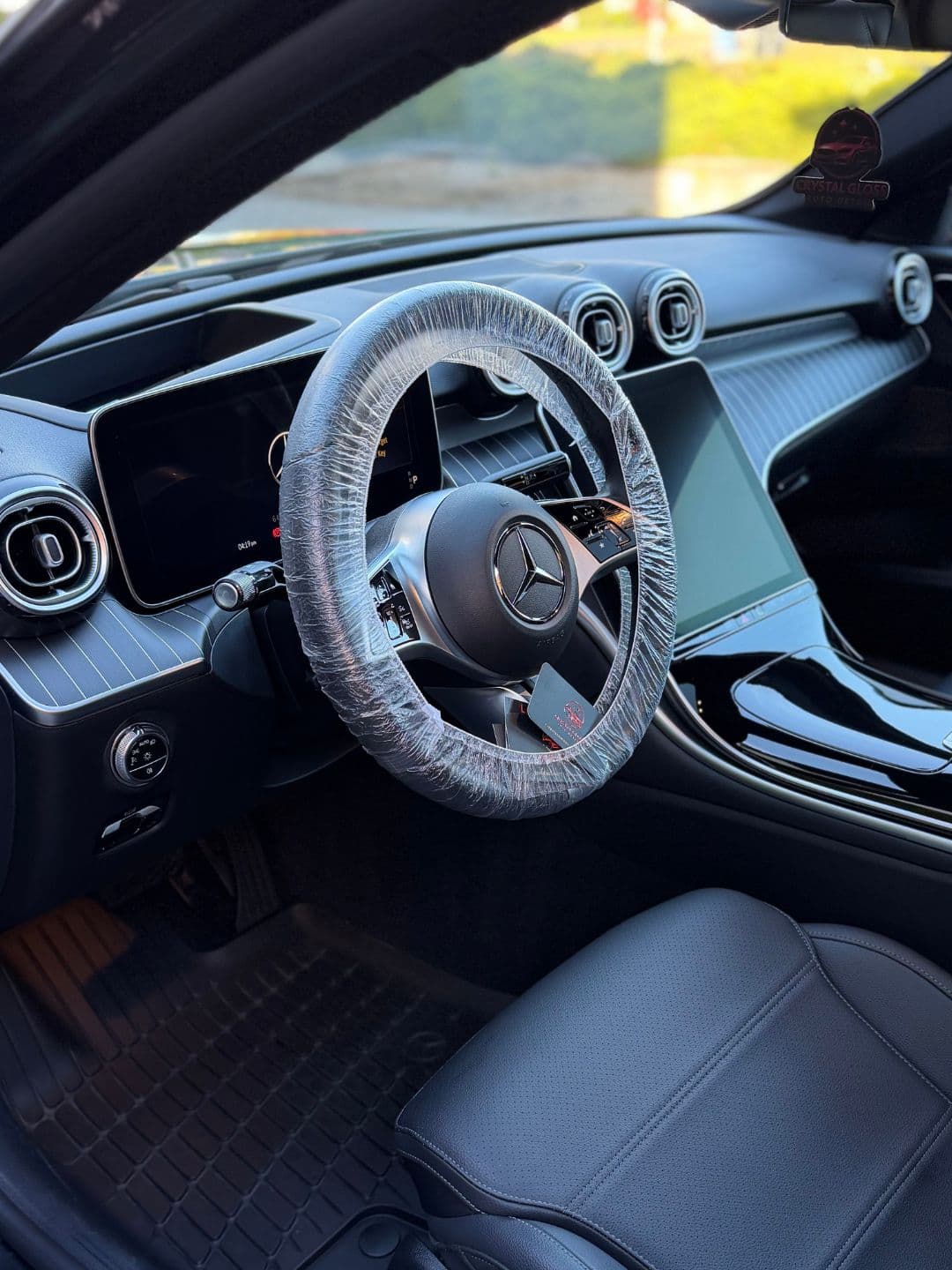
Trail mud from Golden Ears doesn't stay on the carpet — it goes into it. Lift your mats, do the first-breath test, and see what your interior needs.
The Lower Falls trail turns to soup around the middle of October and stays that way until March. Everyone who walks it this time of year does the same thing afterward: boots off at the tailgate if you're organized, straight into the footwell if you're not, then twenty minutes back down Fern Crescent and 232nd with the heater on.
By the third or fourth trip, the driver's footwell has stopped looking like carpet. And in a Maple Ridge November, that carpet isn't drying out between visits.
This post covers why trail mud behaves differently from ordinary dirt, a five-minute check you can do in your driveway, and the one thing most people do that makes it permanently worse. Up front: we clean interiors. We don't find water leaks, and if something is letting water into your car, that needs sorting before any detailing is worth paying for.
What's actually happening
Golden Ears mud is silt and grit, not soil. It's glacial till and decomposed granite — very fine particles plus sharp mineral grit.
- Water is what gets it down there. Dry dirt sits on top and vacuums out cleanly. Wet mud wicks down through the carpet into the foam underlay beneath it, which is why vacuuming a dried patch lifts the surface and leaves the stain.
- Cars don't dry out in a Maple Ridge fall. A closed car at 8°C and near-saturated humidity has no mechanism to get rid of moisture. Carpet that got soaked on Saturday is still damp on Wednesday.
- The smell isn't the dirt. It's bacteria and mould working on damp fibre and the organic matter that came in with the mud — leaf, needle, soil. That's why air freshener does nothing for it. You're masking a biological process with perfume.
- Winter salt makes it worse. Once salt starts going down in December it comes in on the same boots, and salt holds moisture in the carpet rather than letting it go.
Where it shows up
- The driver's heel pad, the highest-traffic spot in any car, and usually where the mat has worn thin or shifted.
- Door sills and jambs, where boots swing through on the way in, and where grit then gets redistributed every trip.
- The cargo area, if that's where the boots and the dog actually ride.
- Seat bolsters and the lower seat edge, from sliding in with wet pants.
- Under the mats — the one almost nobody checks. Water runs around the edge of a mat and sits on the carpet beneath it, out of sight, not drying.
A five-minute check
Five tests, nothing to buy. Do them in the driveway before it gets dark.
- Take the mats out. Not lift the corner — out of the car. Look at the carpet underneath, then press a folded paper towel into it hard for a few seconds. If the towel comes up damp, water has been sitting there.
- Press the heel area with your palm. Push firmly into the driver's footwell carpet. Cool and slightly spongy means the underlay is holding water. Dry carpet feels dry immediately.
- Do the first-breath test. Leave the car closed overnight. In the morning, open the driver's door and smell it in the first two seconds, before your nose adapts. That first breath is exactly what your passengers get. Earthy or musty means damp fibre, not dirt.
- Lift the trunk floor and check the spare tire well. Water that comes in on boots and gear drains down and pools there, and almost nobody looks. A standing puddle under the trunk floor is the single most common source of a smell people chase for months.
- Run a finger along the door sill and into the jamb. Grit you can feel there is grit that's going back onto the carpet on every trip, no matter how well you clean the carpet itself.
Test 1 and test 4 are the ones worth doing even if you skip the rest. Both look at places that stay wet because nobody can see them.
What you can do this week
- Take the mats out and hose them in the driveway, then let them dry fully before they go back in. A damp mat on dry carpet just moves the problem.
- Don't scrub wet mud. Let it dry completely, then vacuum. Scrubbing it wet grinds the silt down into the fibre where a vacuum can't reach it, and that's how a stain becomes permanent.
- Keep a plastic bin or a boot tray in the back for the drive home. One $12 bin stops most of this.
- Run the heater on fresh air, not recirculate, with a window cracked on the way home. Recirculating damp air keeps the moisture in the car.
- Put a blanket down for the dog, then take the blanket out of the car to dry. A wet blanket left on the seat is a wet seat.
- On any dry day this winter, park with two windows cracked for a few hours. Any airflow beats none.
All of that stops new mud and helps the car dry. None of it pulls silt and organic matter back out of carpet backing, and none of it reverses a smell that's already established.
When it needs a professional
A vacuum and a mat rinse are enough when the mud is dry, sitting on top, the carpet under the mats is dry, and the first-breath test comes back clean. Do it yourself and save the money.
It needs an interior detail. When the mud has worked into the fibre, when there are marks that vacuuming doesn't change, when there's grit in the seat rails and the crevices, or when the first breath is musty — that's cleaning that needs chemistry and time, not a shop vac on a Sunday.
It's past a standard interior detail. Carpet that's wet through to the underlay, or a smell that's properly set in, needs carpet shampooing and controlled drying on top of the detail, and we quote that separately once we've seen it. And if there's water actively getting in — a plugged sunroof drain, a failed door seal, a windshield seal — that gets found and fixed first. Detailing a car that's still letting water in is money down the drain, and we'll say so rather than take the booking.
What an interior detail visit does
We're fully mobile, which matters more on this job than most. You've just driven back from the trailhead with a wet car — you shouldn't have to drive it somewhere else to get it cleaned. We come to you in Albion, Silver Valley, Haney, Hammond, Websters Corners and Cottonwood, and we bring water and equipment with us.
Everything comes out first. Mats out and cleaned separately, then a full vacuum including under the seats and along the seat rails where the flicked mud ends up. Then every surface hand-scrubbed, including the cracks and crevices, surfaces conditioned, interior glass done streak-free, and the door jambs and trunk jamb detailed — because the jambs are what re-dirty a clean interior. A few hours, depending on size and how bad it is.
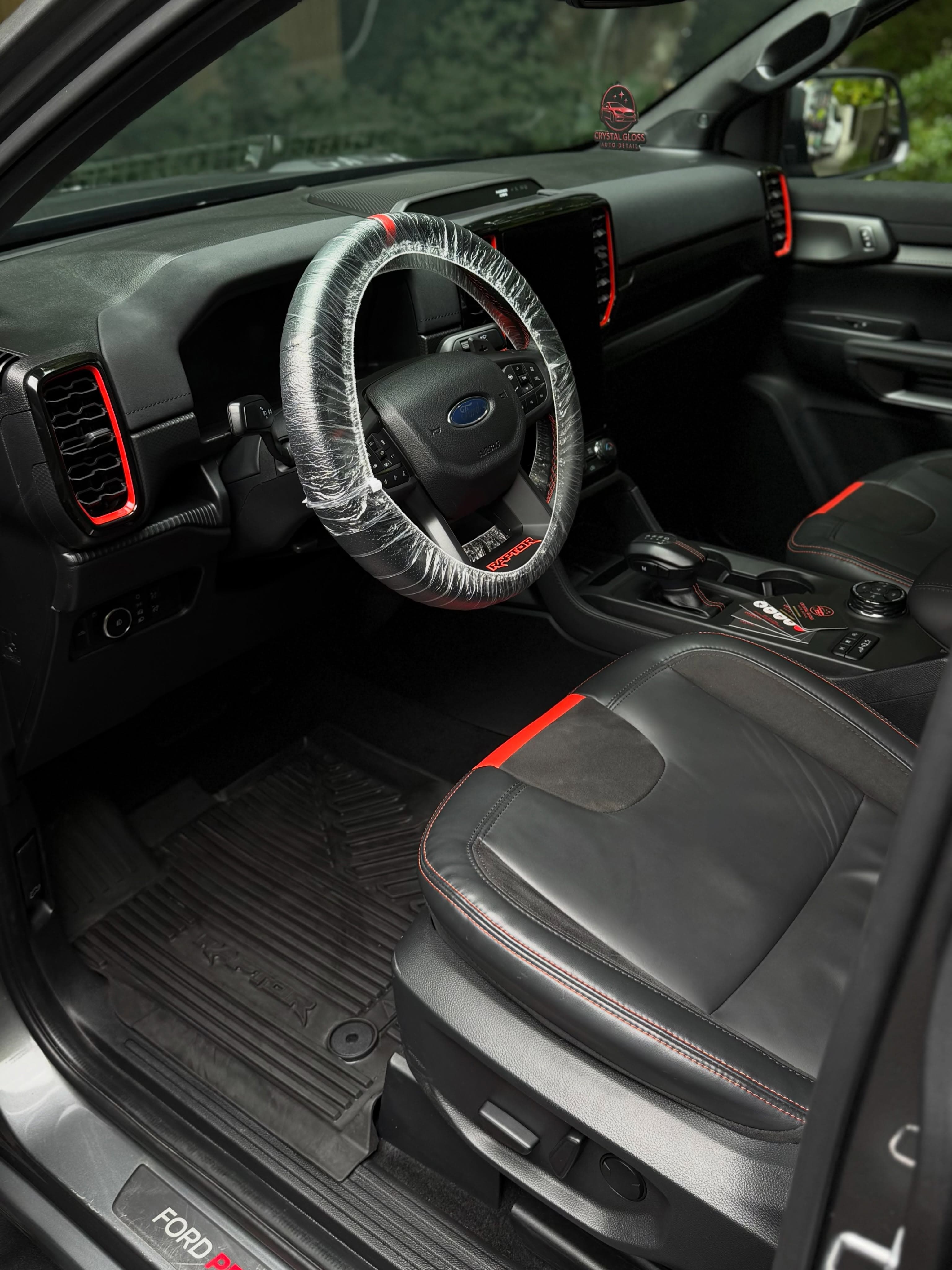
Which visit matches
| What you're seeing | Best fit |
|---|---|
| Dry mud sitting on the mats and carpet | Interior detail — From $200 |
| Mud worked into the fibre, marks that won't vacuum out | Interior detail — From $200 |
| Grit in the seat rails, crevices and door jambs | Interior detail — From $200 |
| Carpet damp under the mats, musty first breath | Interior detail plus carpet shampooing — quoted on the call |
| Water that keeps coming back in the spare tire well | Not us — find the leak first (sunroof drain, door or windshield seal) |
Quick answers
How much is an interior detail in Maple Ridge?
From $200, depending on the size of the vehicle and how soiled it is. No travel charge in Maple Ridge or Pitt Meadows.
Can you actually get trail mud out of carpet?
Usually, if it's recent. Silt that's been ground in and dried repeatedly over a year or two improves a lot but may not come back to new. We'd rather tell you that than promise otherwise.
Will the musty smell stay gone after an interior detail?
Yes, if the carpet ends up dry and nothing is still letting water in. If there's an active leak, the smell comes back no matter who cleans it.
Should I wait until spring to clean a muddy interior?
No. A carpet that stays damp through a Maple Ridge winter is how a seasonal problem becomes a permanent one. Fall is the cheap time to deal with it.
Do I need to be home for a mobile interior detail?
No, as long as we can reach the car and get the doors open. Most Maple Ridge bookings are driveway jobs with nobody around.
How to book
- Call or text (778) 656-2947, or request a quote on the site.
- Tell us the vehicle and whether the carpet is wet or just dirty.
- We confirm a time and an address.
- We show up with water and equipment, and you get your footwell back.
Deal with it before winter sets in
Trail mud is a nuisance in November and a permanent smell by February, and the difference is whether the carpet ever got dry. One visit in your driveway resets it.
Request a quote or call (778) 656-2947. More on what's included on the interior detailing page.