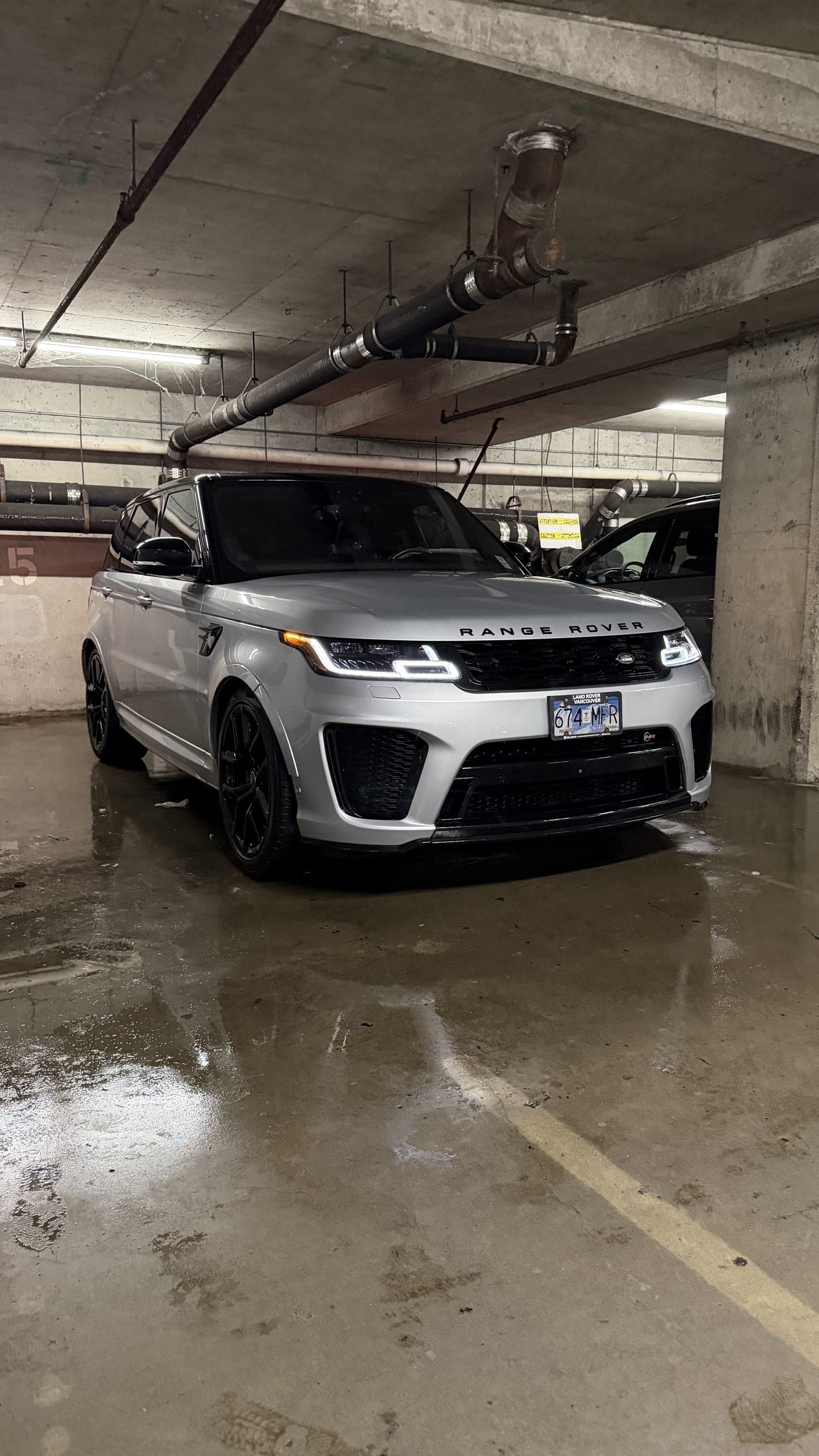
Underground parkade dust isn't ordinary dust — it's brake iron and concrete. Dry wiping it is what swirls your paint. How to check, and what to do.
Your car has been in a covered stall since September. It hasn't seen rain, it hasn't seen sun, and it still has a grey film on it that comes back four days after you wipe it down. Everyone in the Suter Brook and Klahanie towers deals with this, and most people are making it worse.
Here's the part that catches people out: a car parked outside in Port Moody gets rinsed by rain every few days whether you like it or not. A car in an underground stall accumulates for months with nothing washing it off. The dust just sits there, dry, and bonds to the paint.
This post covers what parkade dust actually is, how to check what's sitting on your paint, and the one habit that's doing more damage than the dust. Up front: we wash and decontaminate paint. We don't polish scratches out as part of an exterior detail — that's a separate service.
What's actually happening
Parkade dust isn't dirt blown in from outside. It's generated in the building.
- Brake dust is the main ingredient. Every car coming down the ramp brakes the whole way, and brake pads shed fine iron particles. Those particles land on your paint, and iron doesn't sit politely on the surface — it embeds in the clear coat and oxidizes.
- Concrete dust comes off the deck, the walls and the columns. It's abrasive and alkaline, and any maintenance drilling in the building produces a cloud of it.
- Tires carry road grit in from the street and shed it as they roll past your stall.
- Nothing rinses it off. No rain, no sun, no air movement except the ventilation fans, which mostly just move dust from one end of the parkade to the other.
Parkades are humid, and that's worse in November. Concrete sweats, your car goes damp overnight, the dust turns into a film, and the film dries onto the paint. That's why it stops wiping off cleanly after a couple of months.
The orange or rust-coloured specks in that film are the iron. They're the reason parkade cars often look worse after a wipe-down than before — dragging a dry cloth across embedded iron particles is dragging metal across your clear coat.
Where it shows up
- Lower panels and rocker panels, closest to the brake dust source and almost always the worst.
- The roof and hood, from plain settling, plus drips from whatever is directly above your stall.
- Wheel faces, where iron bonds hardest and shows up as orange streaking when wet.
- The rear hatch on SUVs and wagons, which sits in a low-pressure pocket when you drive and pulls dust onto itself.
- Glass, as a film you don't notice until you run the wipers and it smears across your eyeline on the Barnet.
A five-minute check
Four tests, nothing you need to buy. Do this at your stall.
- The white cloth test. Fold a clean, slightly damp white microfiber and wipe a one-foot square on the hood. Then look at the cloth. Uniform grey means loose dust and road film. Orange or rust-coloured specks mean iron, and iron doesn't come off with soap.
- The baggie test. Put your hand in a sandwich bag and run your fingertips lightly over the paint. The plastic amplifies texture you can't feel with bare skin. Smooth means the paint is clean under the dust. Gritty means there's bonded contamination sitting on top of the clear coat.
- The flashlight test. Parkade lighting is flat and hides everything. Hold your phone light sideways, nearly flat against the hood, and sight across the panel. A web of fine circular scratches means dry wiping has already been happening — the dust was the cause, the cloth was the weapon.
- Look up. Check what's directly over your stall. A pipe, a sprinkler head, a vent. Rust-coloured spotting concentrated in one patch on the roof or hood means something above you is dripping, and no amount of washing fixes the cause.
Test 2 is the one that decides what you need. Smooth paint under the dust means a wash is enough. Gritty paint means washing it won't get you anywhere, because soap doesn't lift particles that are already stuck in the clear coat.
What you can do this week
- Stop dry wiping. This is the single biggest thing on the list. A dry cloth on a dusty parkade car does more damage in thirty seconds than the dust does in a month.
- Keep a spray detailer and two clean microfibers in the trunk. Spray generously, wipe in straight lines, don't scrub, and flip to a clean side often. The spray is there to float the dust off, not to help you rub it in.
- Rinse the car once a month through the winter, even when it looks like it doesn't need it. A touchless rinse beats wiping.
- Never put the gas station squeegee on your paint. It's full of other people's grit.
- If something is dripping on your stall, email strata. It costs you one message and it's the only fix that actually stops it.
- Keep the windows fully shut. Parkade dust finds a cracked window fast.
None of that removes iron that's already embedded. Spray detailer moves loose dust around safely — it does nothing for bonded contamination, and no wash routine will.
When it needs a professional
A regular wash is enough when the white cloth comes back evenly grey and the baggie test feels smooth. Nothing is bonded. Wash it and you're back to normal.
It needs an exterior detail. When the cloth shows orange specks or the paint feels gritty through the bag, the contamination is chemically bonded and has to be dissolved off, not scrubbed off. That's the service.
It's past us. When the flashlight test shows a web of swirls, that damage is in the clear coat and washing won't touch it — that's paint correction, a different service. And if something has been dripping on one spot for a year and left a dull patch that won't improve, that may be etched through the clear coat entirely, which is a body shop conversation, not a detailing one.
What an exterior detail visit does
We're fully mobile, and this is the one job where that matters most — we work in your stall. You don't drive a contaminated car across town to get it cleaned. We come to Suter Brook, Klahanie, Newport Village and the Heritage Mountain complexes, and we bring water and equipment with us.
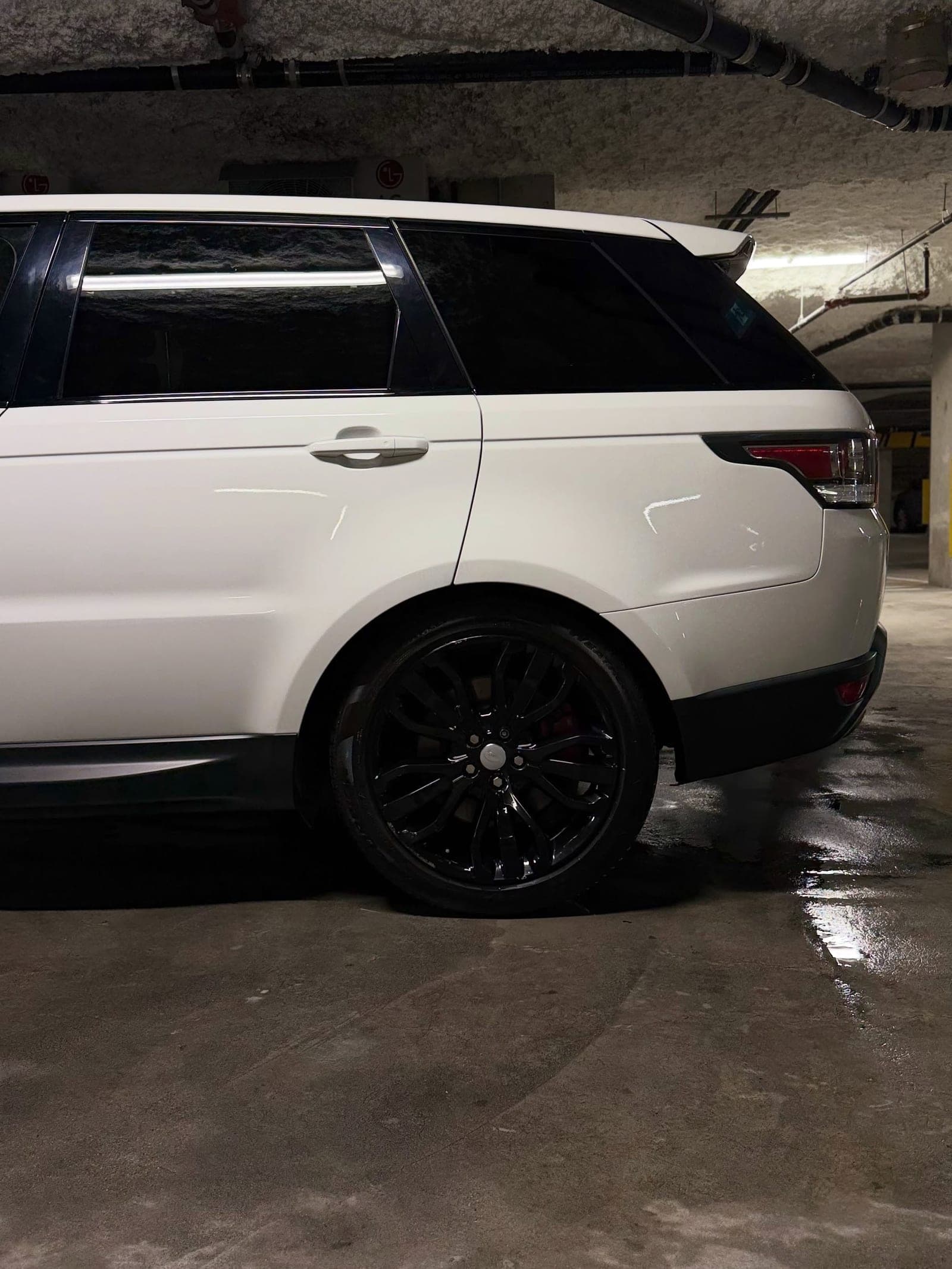
On a parkade car the order matters. Wheels and arches first, because that's where the iron concentration is highest. Then a chemical decontamination pass over the paint to dissolve the bonded iron, then a hand wash, then dried with clean towels, exterior trim and glass finished last. Figure around two hours.
Which visit matches
| What you're seeing | Best fit |
|---|---|
| White cloth comes back grey, paint feels smooth through a bag | Exterior detail — From $100 |
| Cloth shows orange specks, or the paint feels gritty | Exterior detail — From $100 |
| Film that keeps coming back within days of wiping | Exterior detail — From $100 |
| Web of fine circular scratches under a low-angle light | Different service — see paint correction |
| One dull patch under a dripping pipe that won't improve | Not us — body shop assessment |
Quick answers
Can you actually work inside my parkade?
Yes. Suter Brook, Klahanie, Newport Village, the townhouse complexes up Heritage Mountain — we work in the stall and bring water and equipment. Tell us if it's a tandem or pillar-side stall so we plan for the space.
How often does a car parked in a parkade need an exterior detail?
More often than people expect in winter, less often than an outdoor car in summer. Twice through the rainy season handles most buildings.
Why can't I just run a dusty parkade car through a car wash?
A wash removes loose dust. It doesn't remove bonded iron, and the brushes on a soft-touch wash will add swirls to a car that's already carrying grit.
Will an exterior detail get rid of swirl marks?
No. Contamination and clear coat damage are two different problems. Swirl marks need paint correction, which is a separate service.
Do I need to be home for a parkade detail?
No, as long as we can get into the parkade and reach the car. Most Port Moody bookings are fob access arranged ahead of time.
How to book
- Call or text (778) 656-2947, or request a quote on the site.
- Tell us the vehicle, the building, and whether the stall is tight.
- We confirm a time and sort out parkade access.
- We show up with water and equipment and work in the stall.
Get the dust off before it bonds on
Parkade dust is harmless for about a month and a problem after that, and the cloth in your trunk is what turns it into swirl marks. Two hours in your stall resets it.
Request a quote or call (778) 656-2947.