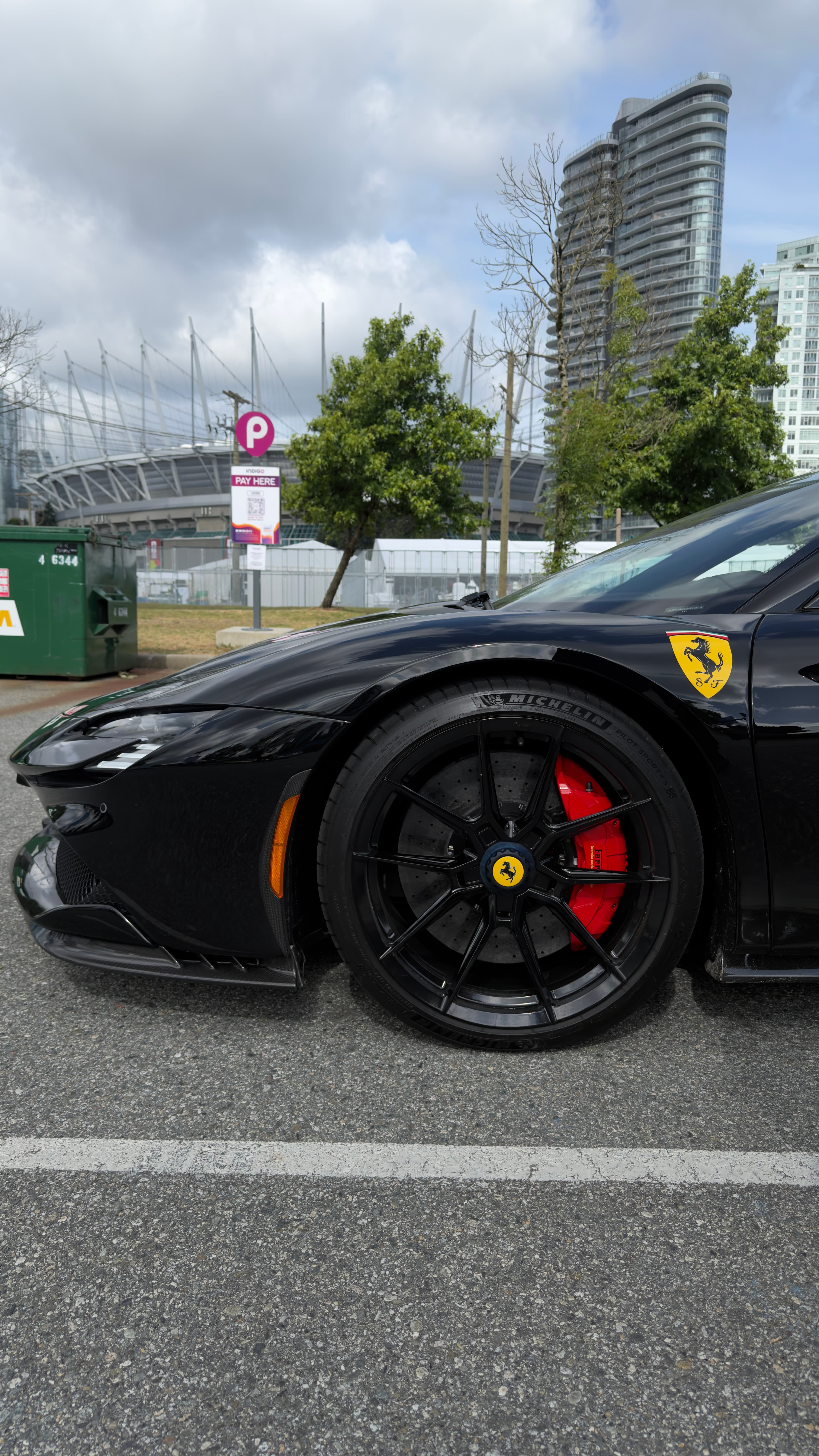
Brake dust isn't dirt — it's hot iron welded into your wheel's clear coat, and winter rain accelerates it. How to check, and what protection does.
Everyone washes their car and gives the wheels a quick pass with the same mitt. Then by February the fronts have a permanent brown cast that no amount of soap shifts, and most people decide that's just what wheels look like after a few years.
It isn't. That's iron, it's embedded in the clear coat rather than sitting on it, and the five months of rain starting now are what turn it from a cosmetic problem into a permanent one.
This post covers what brake dust actually does to a wheel, five checks you can run in your driveway, and the honest version of what a wheel coating does and doesn't prevent. Up front: we clean and protect wheels. We don't refinish them — if the clear coat is already pitted, that's a refinisher's job, not ours.
What's actually happening
- Brake dust is metal, not dirt. Every time you brake, the pad and rotor shed fine iron particles. Semi-metallic and low-metallic pads — which is most vehicles — shed a lot of them.
- It lands hot. Those particles come off the braking surface at high temperature and embed into the wheel's clear coat on contact. They aren't resting on the surface. They're set into it.
- Then it oxidizes. Iron plus moisture equals rust, and that's the orange-brown cast you see. It's happening inside the clear coat, which is why washing doesn't touch it.
- Rain doesn't clean wheels — it feeds the problem. People assume a wet winter rinses everything off. What it actually does is keep embedded iron permanently wet for five straight months, which is exactly the condition oxidation needs.
- Wheel clear coat is thinner than the clear on your paint, and it takes far more heat cycling. Once iron has pitted through it, the bare aluminium underneath starts corroding and nothing brings that back.
- The front wheels do most of the braking — typically 70 to 80 percent of it — so they're always years ahead of the rears.
Where it shows up
- The front faces, worst around the lug area and in the valleys between spokes.
- Behind the spokes, the part most people can't reach and nobody cleans. This is usually the worst visible surface on the car.
- The inner barrel, which almost never gets touched and shows you what the faces are heading toward.
- Around the valve stem, where dust packs into a corner that no mitt reaches.
- The lip where the wheel meets the tire, which collects both brake dust and tire dressing sling.
A five-minute check
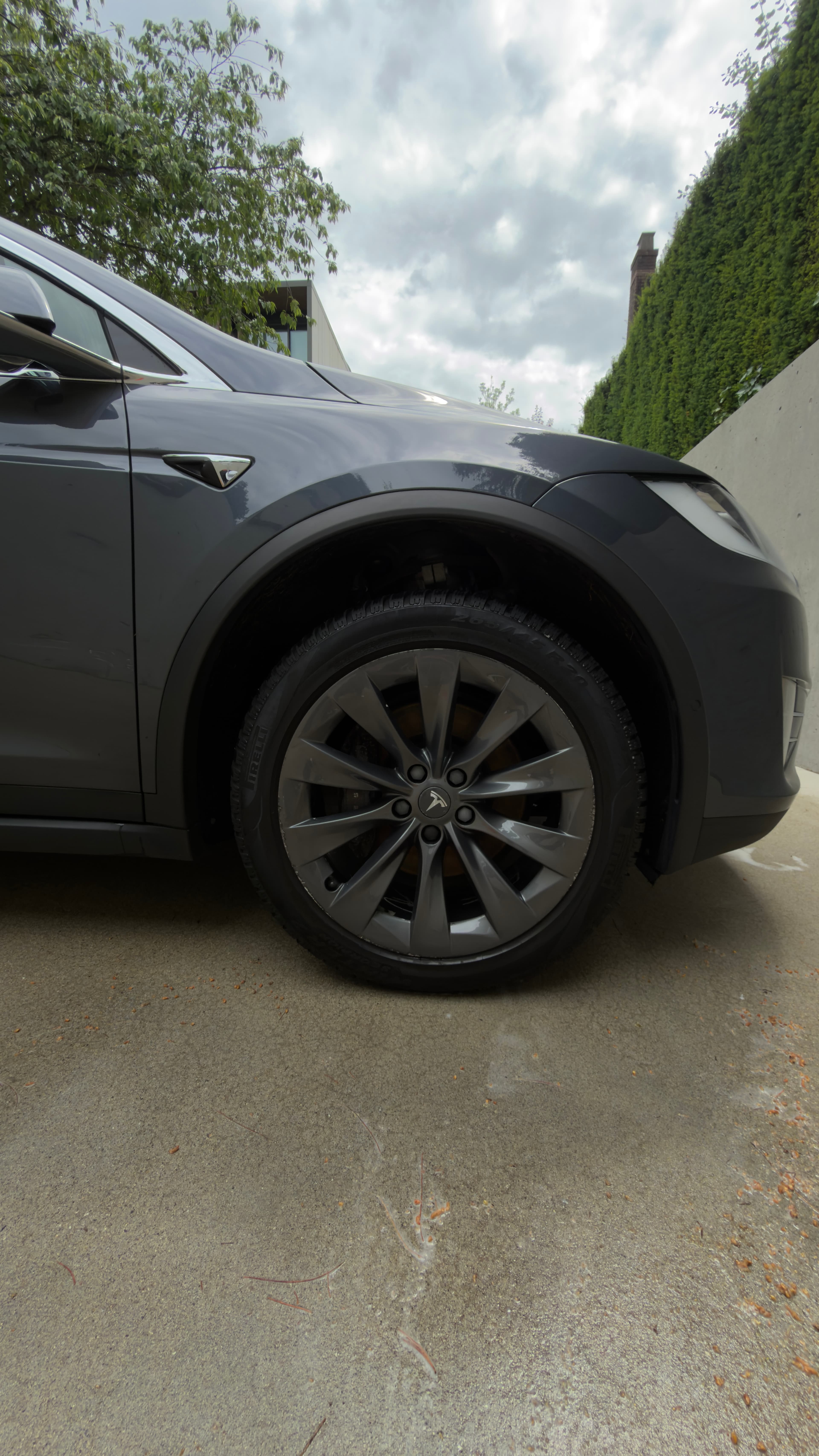
Five tests, nothing to buy. Do them on the front wheels — the rears will look fine and tell you nothing.
- The white cloth test. Fold a damp white microfiber and wipe one firm pass across a front wheel face. Uniform grey is ordinary road film. Orange or rust-coloured specks mean embedded iron, and iron does not come off with soap.
- The baggie test. Hand in a sandwich bag, fingertips over the wheel face. Gritty texture means contamination is bonded into the finish, not sitting on it.
- Reach behind the spokes. Run a finger down the back of a spoke as far as you can get. Crusty and textured means years of accumulation, and it's dragging the rest of the wheel down with it.
- Look at the face at a low angle in direct light. Tiny orange pinpricks scattered across the clear coat is iron already embedded and oxidizing. That's the stage where decontamination still works.
- Turn the wheels to full lock and look at the inner barrel. It's the least-maintained surface on your car, and whatever state it's in is a preview of where the faces end up in a couple of years.
Test 4 is the one that decides the timing. Orange pinpricks mean you're still in the window where this is fixable. Pitting you can catch a fingernail on means you're past it.
What you can do this week
- Use separate tools for wheels. Never the same mitt as your paint. A mitt that's been on a wheel is carrying iron and grit, and the next panel you touch with it gets scratched.
- Never wash a hot wheel. Cleaner flash-dries on hot metal and can stain the finish permanently. Let them cool first.
- Rinse the wheels weekly through winter, even when you're not washing the car. Thirty seconds each with a hose, and it stops loose dust becoming embedded dust.
- Get behind the spokes. A soft long-handled wheel brush is about fifteen dollars and it's the single biggest improvement available to you.
- Be careful with acid wheel cleaners on finishes you can't identify. Polished, anodized and chrome wheels can be etched permanently by the wrong product, and the damage is instant.
All of that removes loose dust and slows new accumulation. None of it lifts iron that's already set into the clear coat, and nothing reverses pitting that's gone through to the metal.
When it needs a professional
A rinse and a wheel brush are enough when the white cloth comes back grey, the face feels smooth through a bag, and there's nothing orange in the clear coat. Keep doing that and you'll never need us for this.
It needs a wheel detail. When the cloth shows orange specks, when the face feels gritty, or when there's visible build-up behind the spokes — that's chemical iron decontamination, which dissolves the particles rather than scrubbing at them, plus proper cleaning of the face, barrel and lug area.
It's past us. Pitting you can catch a fingernail on means the iron has gone through the clear coat and the aluminium underneath is corroding. Cleaning won't reverse that and coating over it just seals the damage in. That's a wheel refinisher. Same answer for peeling clear coat or curb rash.
What a wheel detail and coating does
We come to you anywhere in Metro Vancouver — driveway, office lot or parkade. We bring water, equipment and lighting.
Faces and barrels get cleaned, then a chemical iron decontamination pass that dissolves the embedded particles instead of abrading them off, then everything is dried properly before anything goes on. The coating is applied to clean, dry wheel faces, where it gives a slick, heat-tolerant layer for brake dust to land on instead of your clear coat.
Three limitations, stated plainly. A coating does not stop brake dust — nothing does, short of changing your pads. What it does is stop the dust bonding, so a rinse actually removes it instead of leaving a stain. It only goes on clean wheels, so if the clear coat is already pitted we'll tell you before we start rather than coat over damage. And for a proper job on the barrels the wheels really want to come off — left on the car, the barrel gets what's reachable and no more.
Which visit matches
| What you're seeing | Best fit |
|---|---|
| Grey film that wipes off, face smooth through a bag | Rinse weekly — you don't need us |
| Orange specks on a white cloth, gritty face | Wheel detail with coating |
| Heavy build-up behind the spokes | Wheel detail with coating |
| New or newly refinished wheels you want to keep that way | Wheel detail with coating |
| Pitting you can catch a fingernail on, or peeling clear coat | Not us — wheel refinisher |
Quick answers
Does a wheel coating stop brake dust?
No, and anyone saying otherwise is selling. Your pads shed the same amount either way. What changes is that the dust sits on the coating rather than embedding in the clear coat, so it rinses off instead of staining.
Can you clean and coat wheels with them on the car?
Yes, and most bookings are. The faces come out the same. The barrels get what's reachable, and if you want those done properly the wheels need to come off — tell us when you book and we'll talk through it.
How often do wheels need iron decontamination?
Once a year is enough for most drivers, and the best time is before the wet season rather than after it.
My paint has the same orange specks on the lower panels. Is that the same problem?
Same cause, same chemistry — brake dust blown off the wheels onto the paint behind them. That's covered in the Golden Ears road spray post.
Do it before the wet months, not after
Embedded iron plus five months of constant moisture is how a cosmetic problem becomes a refinishing bill. Right now the fix is a cleaning job. In March it might not be.
Call or text (778) 656-2947, or request a quote. More on protection options on the ceramic coating page.