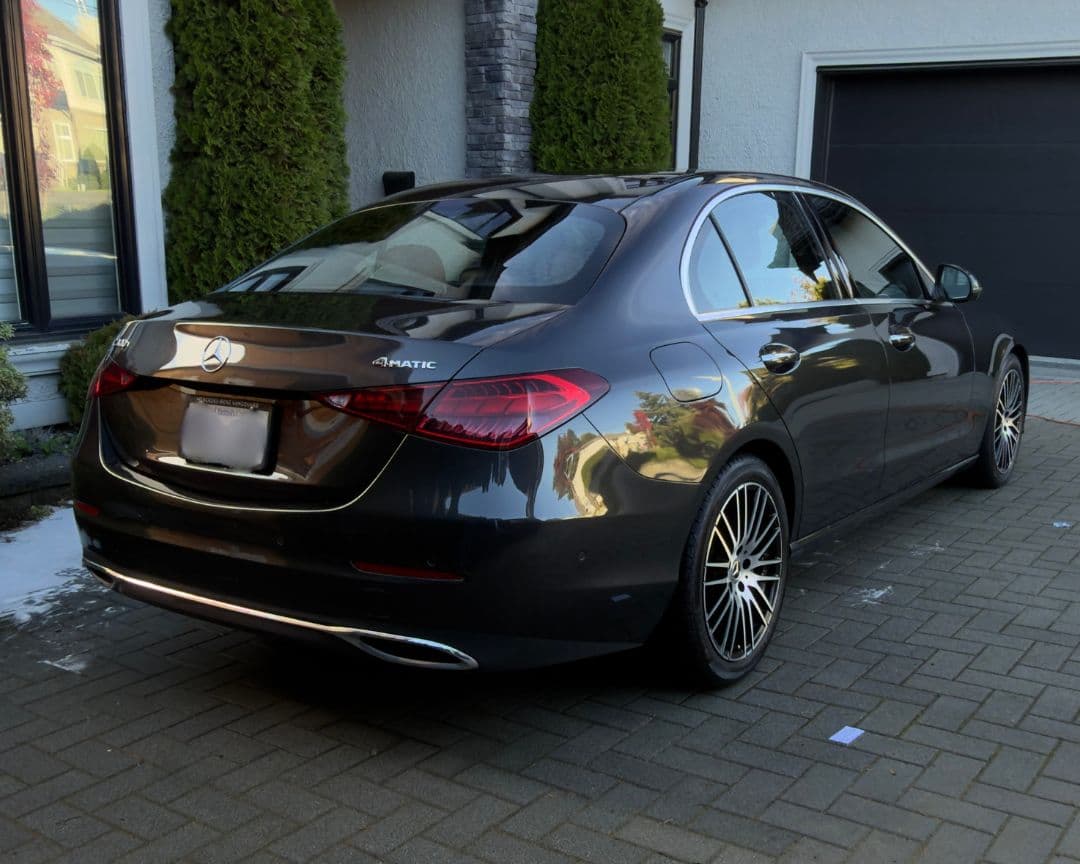
Bridge decks get anti-iced before roads do, so the Golden Ears coats your car in salt and oily grit. How to check it, and why soap won't cut it.
If you cross the Golden Ears twice a day you already know the look. By the second week of November the back of your car has a uniform grey-brown haze, the side glass is filmed, and no amount of washer fluid stops the windshield smearing.
That's not ordinary road dirt, and it's not coming off with a sponge. The bridge puts something specific on your car, and the reason it's worse than the Lougheed is structural.
This post covers what's actually in bridge spray, five checks you can run in your driveway, and why a trip through the car wash leaves you worse off than before. Up front: we wash and decontaminate paint. We don't polish out scratches as part of an exterior detail — that's a separate service.
What's actually happening
- Bridge decks get treated before roads do. A deck has no ground heat underneath it, so it freezes while the roadway on either side is still above zero. Winter maintenance crews anti-ice bridges first and more often, which means the Golden Ears is reliably the saltiest surface on your commute.
- Anti-icing brine is liquid, so it atomizes. It doesn't sit on the deck like rock salt. It comes off the vehicle ahead of you as spray and coats the sides, the glass and the whole back of your car — not just the underside.
- It doesn't dry. Salt holds moisture out of the air, and you're over a river, in winter, in the Fraser Valley. That film stays damp for days.
- The bridge is a truck route. Diesel soot and oily exhaust residue mix into the same film, and that's the part that matters most — the film is oily as well as salty, so water beads off it instead of lifting it. That's why rinsing a bridge-commute car seems to do nothing.
- Add grit. Deck surface, expansion joints, brake dust off the long approaches. The film you're looking at is salt, oil and fine abrasive, all in one layer.
That last combination is the whole problem. Separately each one is manageable. Together you've got an abrasive held in place by an oil film that water won't shift, and the standard response — wipe it, or run it through a brush wash — drags the abrasive across your clear coat.
Where it shows up
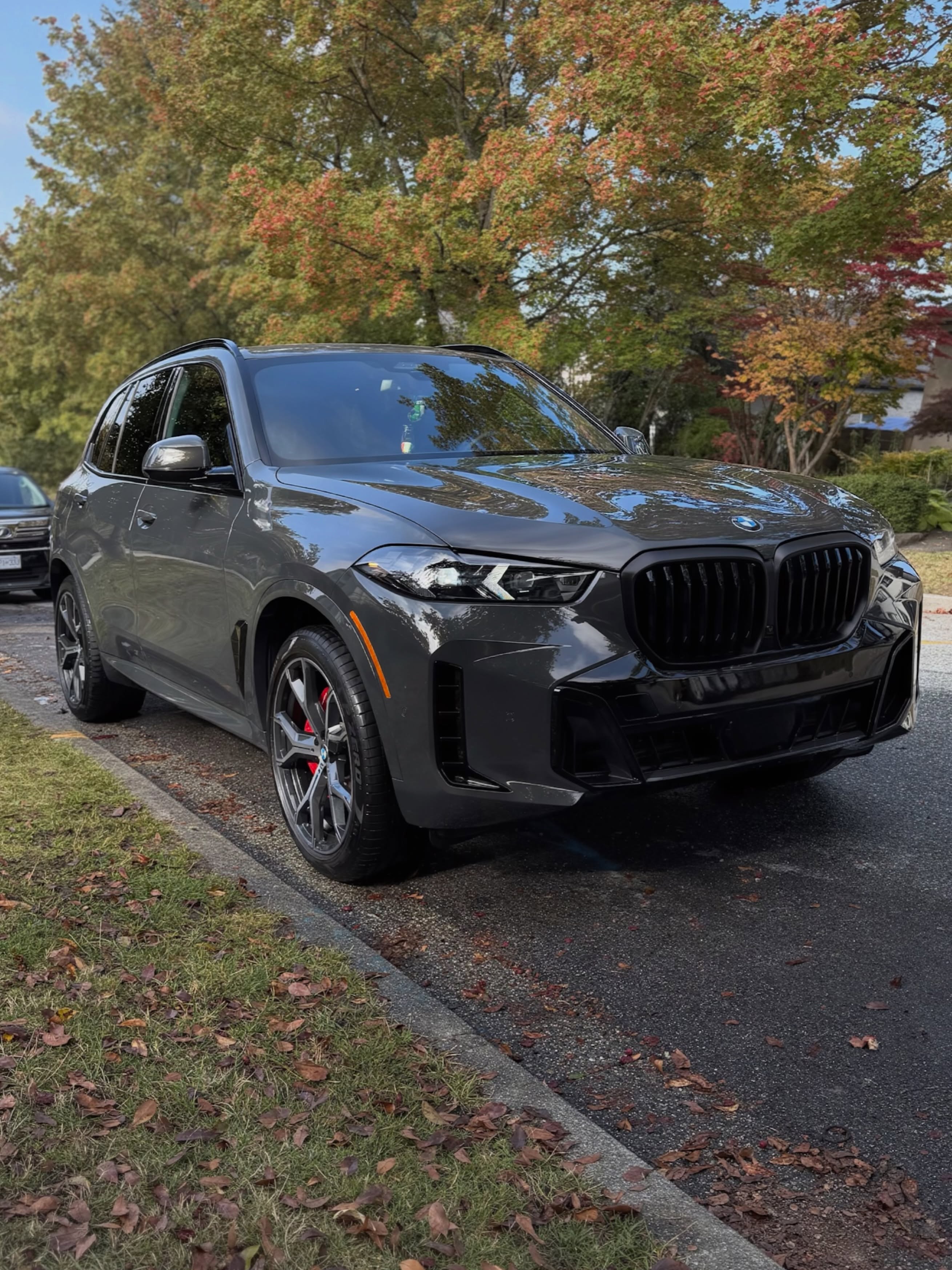
- The rear hatch, tailgate and rear bumper, worst of all on SUVs, wagons and hatchbacks. The low-pressure wake behind a tall vehicle pulls spray straight onto its own back end.
- Lower doors and rockers, from the car ahead and from your own front tires.
- Side glass and mirrors, which is a visibility problem rather than a cosmetic one.
- Headlight and tail light lenses — a salt-and-oil film scatters your beam at night exactly like lens haze does.
- Door shuts and sills — spray gets past the seals and settles on the painted faces inside the shut, where nobody washes.
A five-minute check
Five tests, nothing to buy.
- White cloth on the rear hatch. Fold a clean, slightly damp white microfiber and make one pass across the tailgate or rear bumper. Grey-brown means road film. An oily sheen on the cloth means the diesel component is in there, and that's the part soap alone won't lift.
- The baggie test on the lower doors. Hand in a sandwich bag, fingertips lightly over the paint. The plastic amplifies texture your fingers miss. Gritty means the contamination is bonded, not sitting loose.
- Open a rear door and look inside the shut. The painted face in the door shut and the sill below it is where spray collects and never gets washed. It's the honest measure of how much is getting onto the car, because nothing has wiped it off.
- Check your headlights against a wall at night. Clean one small patch of the lens properly and compare it to the rest of the beam. Film on the lens costs you real distance down the road.
- Run a fingertip along the wiper blade edge. Grit embedded in the rubber is what streaks your windshield, and no amount of washer fluid fixes a contaminated blade.
Test 1 is the one that tells you what you're dealing with. A grey cloth means keep rinsing. An oily cloth means washing isn't going to be enough.
What you can do this week
- Rinse far more often than feels justified. Once a month doesn't manage salt. Every week or two through the winter does, and a rinse is better than nothing even when the car's going to be dirty again by Thursday.
- Flood it before you touch it. Never wipe a bridge-commute car dry, and never use a dry cloth on the rear hatch. The grit is the damage, not the dirt.
- Skip the soft-touch brush washes. Those brushes are carrying grit off the cars that went through before you, and on a filmed car they're a swirl machine. Touchless is slower to clean but it won't scratch.
- Wipe the wiper blades with a damp cloth weekly. Ten seconds, and it both stops the streaking and makes the blades last.
- Clean the door shuts when you wash. Open each door and wipe the shut faces and the sill. Almost nobody does this and it's where the worst of it accumulates.
- Rinse the underside if your wash has that option.
All of that keeps salt from sitting on the paint for months at a time. None of it removes an oily film that's already bonded, and none of it undoes the swirls you've already put in by wiping.
When it needs a professional
A regular rinse is enough when the white cloth comes back evenly grey and the baggie test feels smooth. Nothing is bonded, you're staying on top of it, don't spend money.
It needs a full detail. When the cloth comes back oily, when the paint feels gritty through the bag, or when washing it properly still leaves a haze — the film is chemically bonded and has to be dissolved off rather than scrubbed off.
It's past us. A web of fine swirls under a low-angle light is damage in the clear coat, and washing will never touch it — that's paint correction, a different service. And if salt has been sitting in a chip down to bare metal since last winter, there may already be corrosion spreading under the paint, which is a body shop assessment rather than anything we do.
What an exterior detail visit does
We come to you — Albion, Haney, Hammond, Silver Valley, Websters Corners, Pitt Meadows. Driveway or office lot, and we bring water, equipment and lighting. You don't drive a salt-covered car anywhere to get it off.
Order matters on a winter car. Wheels and arches first, because that's where the concentration is highest. Then a chemical decontamination pass over the paint to dissolve the bonded film and the embedded iron, then a hand wash, then dried with clean towels. Door shuts and jambs get done, then exterior trim and glass last. Around two hours.
Which visit matches
| What you're seeing | Best fit |
|---|---|
| White cloth comes back grey, paint smooth through a bag | Keep rinsing — you don't need us |
| Cloth comes back with an oily sheen | Exterior detail — From $120 |
| Paint feels gritty through a sandwich bag | Exterior detail — From $120 |
| Film in the door shuts, on the glass and the light lenses | Exterior detail — From $120 |
| Web of fine circular scratches under a low-angle light | Different service — see paint correction |
| Rust spreading out from a stone chip | Not us — body shop assessment |
Quick answers
How much is an exterior detail in Maple Ridge?
From $120, depending on vehicle size and condition. No travel charge in Maple Ridge or Pitt Meadows.
Why doesn't a car wash remove winter road film?
Because the film is oily as well as salty, and soap and water bead off oil rather than lifting it. The brushes then drag the remaining grit across the paint, which is how a clean-looking car ends up covered in swirls.
How often should I wash my car in winter in Metro Vancouver?
Every week or two if you're crossing a bridge daily. It feels excessive, and it's the difference between a film you can rinse off and a film that has to be chemically removed.
Can you detail a car in the rain?
Yes. The wash isn't affected; the final dry is the part we schedule around. We bring our own lighting for the dark afternoons.
My paint looks dull as well as dirty — is that the same problem?
Related but not the same. Dullness is usually clear coat damage rather than contamination, and that needs paint correction rather than washing.
Get it off before it sets in for the winter
Bridge spray is a nuisance in November and a bonded layer by February, and by then it's taken your light output and your wiper blades with it. Two hours in your driveway resets it.
Call or text (778) 656-2947, or request a quote. If you're thinking about protecting the paint before the salt builds up, the pre-brine paint prep guide covers what's worth doing and what isn't, and the lower-door and rocker guide covers where that spray actually corrodes paint on a Tri-Cities car. We work year-round in Maple Ridge — the mobile detailing in the rain page covers what that looks like in practice.