A shop has a controlled room. Mobile means the car never drives on fresh coating. The honest comparison, and how to tell which one your car needs.
If you're pricing a ceramic coating in Metro Vancouver you've found two kinds of company. There are shops with a unit in Burnaby or Richmond where you drop the car off for a few days, and there are mobile installers who come to your driveway. The prices are broadly similar and both will tell you theirs is the better way.
We're a mobile installer, so you already know which way I lean. But there are genuinely situations where a shop is the better answer, and I'd rather tell you that than talk someone into a booking that doesn't suit them.
This post covers what's actually identical between the two, what each one does better, and a five-minute check on your own situation that tells you which you need. One thing up front: this is about coating application. We don't do heavy multi-day restoration work, and if that's what your paint needs, that's a different conversation.
What's actually the same
Most of it, which is the part nobody says out loud.
- The process is identical. Wash, chemical decontamination, paint correction where it's needed, a panel wipe to strip residue, then the coating applied by hand, panel by panel. There is no step a shop performs that a mobile installer cannot.
- The products are the same. System X®, Gtechniq, Adam's — these are sold to installers, not to buildings. A certified installer is certified whether they work in a unit or a driveway.
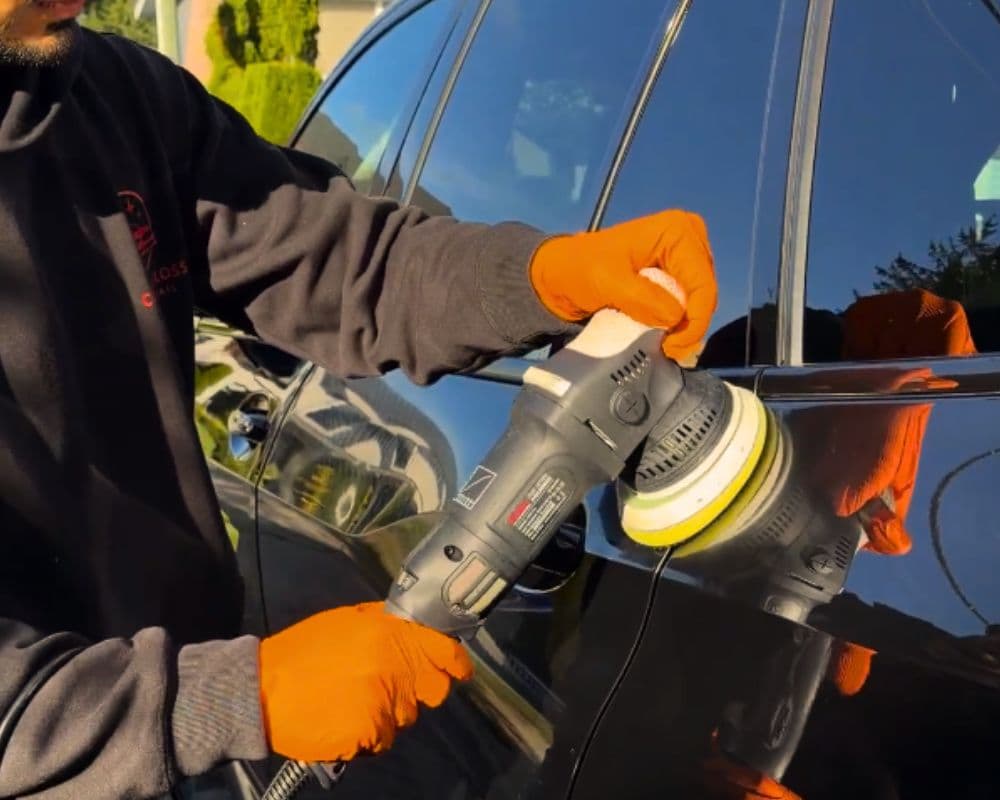
- The skill is the same skill. Correction is the hard part of a coating job and it's done by hand with a polisher either way.
- Neither one uses a paint booth. Booths are for spraying paint. A coating is wiped on and levelled by hand, and no manufacturer requires a booth to apply one.
What actually differs is the environment and the logistics, and those cut in both directions.
What a shop genuinely does better
- Controlled conditions. No wind, no pollen, no surprise rain, and stable temperature and humidity through the cure. In a Lower Mainland February that's a real advantage, not a marketing line.
- Permanent lighting. Fixed inspection lighting finds defects that portable lights can miss. For heavy correction work that matters.
- Time. A car can sit for three days. Multi-stage correction on badly swirled paint is far easier when the vehicle lives there and nobody needs it back by five.
- Equipment that doesn't travel. Lifts, wheels off, access to barrels and underside.
If your paint needs serious multi-stage correction, or you're having a show car done properly, a shop is the right call and I'd tell you so on the phone.
What mobile does better
- The car never drives on a fresh coating. This is the one that actually matters. A coating needs to stay dry while it sets, and the first day is when it's most vulnerable. Collecting your car from Burnaby and driving it home down the Lougheed in November road spray is precisely what it shouldn't be doing. Coated in your driveway, it cures where it sits.
- You keep your car. No three days without a vehicle, no arranging rides, no time off work to drop off and collect.
- You can watch the correction happen. Most people have never seen what polishing actually does, and it's the clearest demonstration of what they're paying for.
- Your car isn't on someone else's lot overnight. For some people that matters more than anything else on this list.
- No rent in the price. A shop's overhead is in their number whether they mention it or not.
A five-minute check on your own situation
This decides it, and it's about where you live rather than what car you drive.
- Where will the car sit for the first 24 hours after? A garage or carport is ideal and makes mobile the obvious answer. An open driveway is workable. Street parking under a tree is the one case where a shop might genuinely serve you better.
- Can you actually be without the car for three days? Be honest. Plenty of people book a shop and then collect the car early, which is worse for the coating than either option done properly.
- Is there room to work? Someone needs to walk a full circle around the car with a polisher, and a canopy needs to go over it. A tight parkade stall or a car wedged between a fence and a hedge is a problem worth mentioning when you book.
- What does the ten-day forecast look like? Mobile work in winter gets scheduled against dry windows rather than fixed dates. If you need it done on one specific day in January regardless of weather, a shop can promise that and we can't.
- How bad is the paint, really? In the dark, hold a phone light nearly flat against a panel and sight across it. Light swirls mean a single-stage correction and either option works. Deep defects across every panel mean multi-stage work and a shop has the easier time of it.
If questions one and five both come back favourable, mobile is simply the better deal. If either is a problem, say so when you call and we'll tell you honestly.
Three myths worth ignoring
“Mobile can't do a proper coating.” The work is identical and the tools are portable. What's true is that mobile needs suitable conditions, which is a scheduling question rather than a quality one.
“You need a dust-free environment.” Helpful, not required. Coatings are applied and levelled by hand in the minutes after they go on, and a canopy over a clean car in a driveway is a perfectly normal install environment.
“Shops are more professional.” Some are excellent. So are some mobile outfits, and some of both are not. Ask about certification, ask what correction is included, and ask what happens if something goes wrong. Those answers tell you far more than whether there's a building involved.
Which one you actually want
Go with a shop if your paint needs multi-stage correction, if you have nowhere covered or sheltered for the car to sit afterwards, or if you need a guaranteed date in the middle of winter that weather can't move.
Go mobile if your paint is in decent shape or needs a single-stage correction, if you've got a garage, carport or driveway, and if being without your car for three days is a genuine hassle. That describes most people.
Wait if it's the middle of a wet stretch, nothing is urgent, and you have neither covered parking nor flexibility. A coating applied in the wrong conditions is worse than one applied in March.
What a mobile coating visit actually looks like
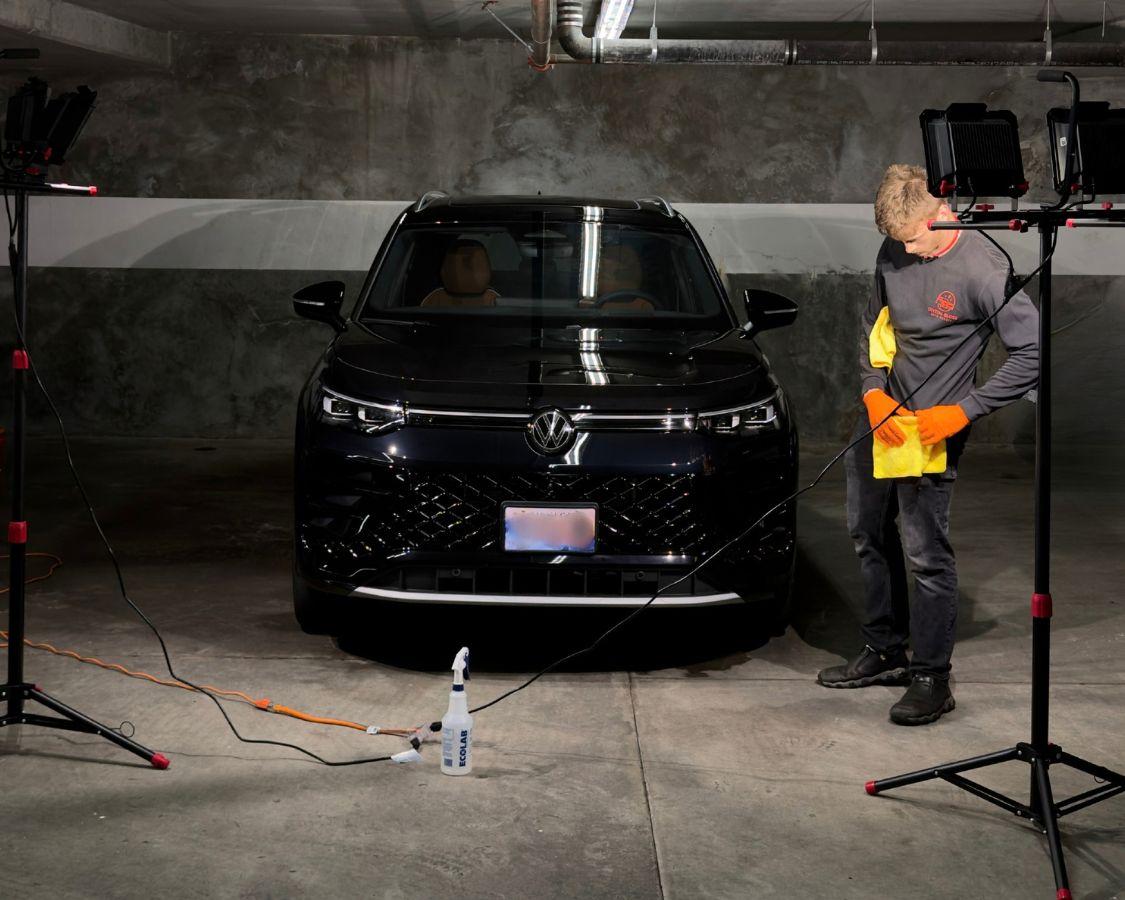
We're a certified System X® installer and we're fully mobile across Metro Vancouver. We bring water, equipment, lighting and a portable canopy, and we work in your driveway, your office lot or your parkade.
Decontamination first, then correction where the flashlight test says it's needed, then a panel wipe, then the coating applied by hand panel by panel, then cure time with the car undisturbed where it already lives. It's a longer job than a detail and it gets booked against the forecast rather than on a fixed date — more so between November and March. More on how we handle that on the working in the rain page.
What Crystal Gloss Auto Detail charges
- System X® Crystal+, 2-year warranty — From $1,119
- System X® Pro+, 6-year warranty — From $1,319
- System X® Max G+, lifetime warranty — From $1,619
- No travel charge anywhere in Metro Vancouver
There's also a top-tier Phantom option for people who want the maximum, detailed on the ceramic coating page.
Two limitations stated plainly. Paint correction is quoted after we've seen the car, not over the phone, because the flashlight test only tells you so much from a description. And a winter booking is scheduled around a dry window — if a fixed, weather-proof date is what you need, that's the honest case for a shop.
Which visit matches
| Your situation | Best fit |
|---|---|
| Garage or carport, paint in decent shape | Mobile — System X® Crystal+ or Pro+, from $1,119 |
| Driveway, keeping the car long term | Mobile — System X® Max G+, from $1,619 |
| Heavy swirling across every panel, show-car finish wanted | A shop with multi-day correction capacity |
| No covered parking, need a guaranteed January date | A shop |
| Clear coat already failing or peeling | Neither — that's a refinisher |
Quick answers
How much is a ceramic coating in Metro Vancouver?
From $1,119 for the 2-year System X Crystal+, through the 6-year and lifetime tiers. No travel charge anywhere in Metro Vancouver.
Is a mobile ceramic coating as good as one done at a shop?
The application is the same work with the same products. What differs is the environment, which is managed by scheduling around weather rather than by having a building. The one real mobile advantage is that the car doesn't drive anywhere on a fresh coating.
Can you apply a ceramic coating in a parkade?
Yes, provided there's room to walk around the car with a polisher. Parkades are good coating environments because they're dry and out of the wind.
What happens if it rains on the day of a mobile coating?
We reschedule. Winter bookings are scheduled against the forecast, and we'd rather move the date than apply a coating in conditions that will compromise it.
How do I know if my paint needs correction before a coating?
In the dark, hold a phone light nearly flat against a panel and sight across it. A web of fine circular scratches means swirl marks, and correction is the honest answer before protection goes on top.
Book it where the car already lives
For most people in Metro Vancouver the deciding factor isn't the quality of the work, it's whether you want to spend three days without your car and then drive a fresh coating home through winter road spray.
Call or text (778) 656-2947, or get in touch. We cover the whole region, including Maple Ridge and the Tri-Cities. More on the service itself on the ceramic coating page.