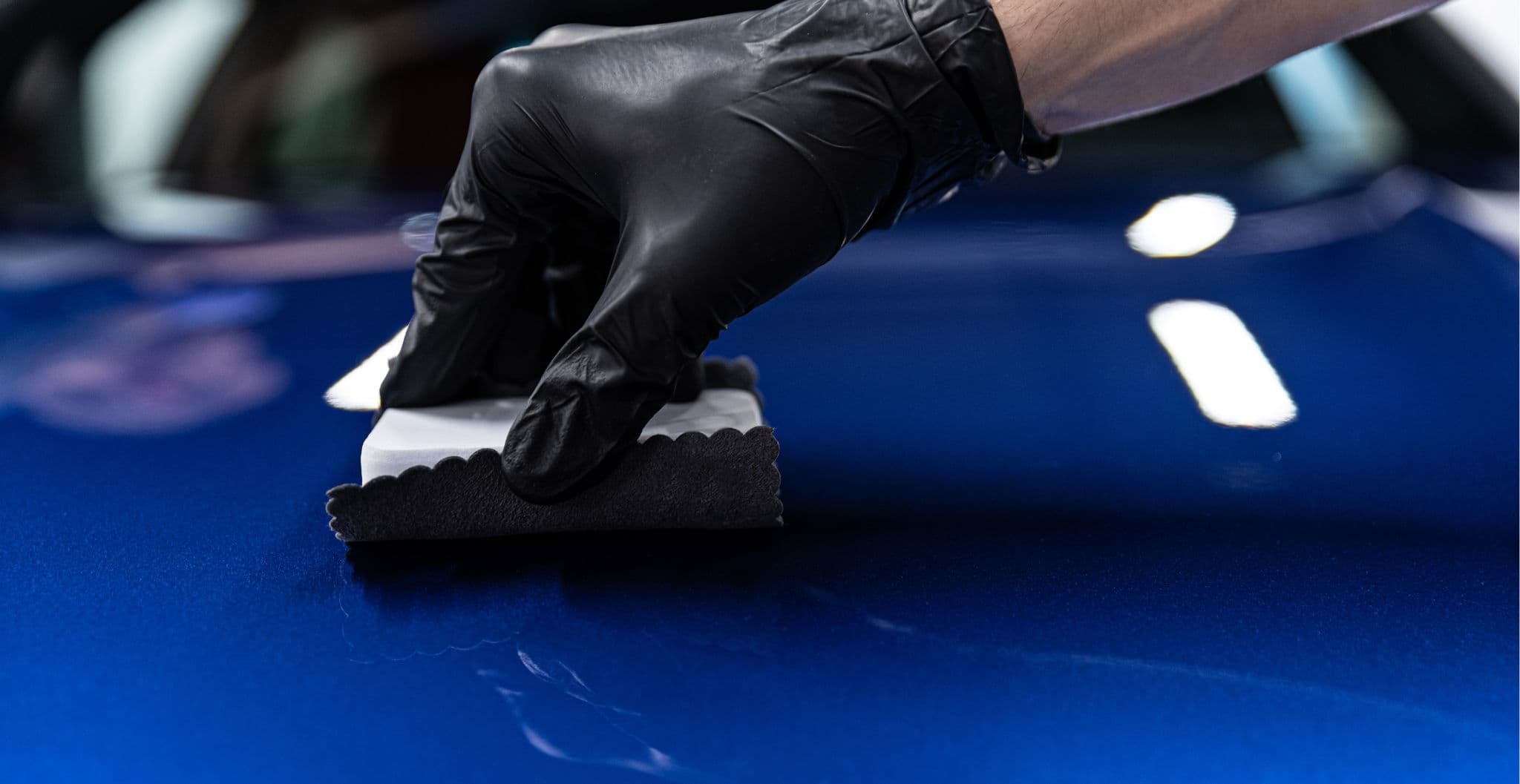
Brine goes down on Lougheed with the first frost, and it doesn't dry off. Five checks to run on your paint now, and what's worth doing before winter.
The first overnight frost in the forecast is when the brine trucks go out. They run Lougheed, the Mary Hill Bypass and the bridge approaches before the cold arrives, not after — it's anti-icing, so it goes down ahead of the event.
Which means the window you have to do anything about your paint is the next couple of weeks, not December. Once that spray is on the road, every trip into Haney puts more of it on your car, and anything you want to do to the paint gets longer and more expensive.
This post covers what brine actually does differently from rock salt, five checks you can run in your driveway tonight, and the honest version of what a coating does and doesn't protect. Up front: we coat and correct paint. We don't repair rust, and if your arches are already bubbling, a coating is the wrong thing to spend money on.
What's actually happening
- Brine is liquid, so it goes everywhere. Rock salt bounces and sits on the road surface. Brine atomizes into spray behind every vehicle and coats the rockers, lower doors, wheel arches, the whole underside, and the back of your own car from your own tires.
- It doesn't dry off. Salt is hygroscopic — it pulls moisture out of the air and holds it. A brine film on your paint stays a damp salt layer for days instead of drying to a crust you could brush off. That's the real difference, and it's why brine is harder on a vehicle than the old rock salt was.
- Some mixes are more aggressive than others. Magnesium chloride, used in colder applications, holds moisture more strongly than plain sodium chloride.
- The damage starts where the paint is already broken. On intact clear coat, a salt film mostly sits there until you wash it off. In a stone chip that's gone through to metal, it holds water against bare steel and corrodes outward underneath the paint.
- Brine plus road grit is a slurry. Wiping or washing a brined car without flooding it with water first is dragging grit across clear coat.
There's no honest number for how long any of this takes. It depends on the car, the chips, how often it gets washed and how much highway you drive. Anyone who gives you a timeline is making it up.
Where it shows up
- Rockers and lower doors, taking direct spray off the front tires.
- Wheel arch lips and the inner arch, where the spray concentrates and the grit packs in.
- The rear bumper and tailgate, coated by your own rear tires on every drive.
- The leading edge of the hood and the lower front bumper, where existing stone chips are.
- Door bottoms and their drain holes, which block with grit and then hold water inside the door shell.
A five-minute check
Five things, in your driveway, no products needed. Do them before the brine starts rather than after.
- Check the leading edges for chips to metal. Hood front edge, lower bumper, mirror caps, the base of the A-pillars. You're looking for anything past the paint into grey primer or bright metal. Those are the entry points, and a coating does nothing for them — it goes over the top of a chip, not into it.
- The baggie test. Put your hand in a sandwich bag and run your fingertips over the hood and doors. The plastic amplifies texture your fingers miss. Gritty means bonded contamination, and anything applied on top of contamination locks it in permanently.
- The flashlight test. In the dark, hold your phone light nearly flat against a panel and sight across it. A web of fine circular scratches means swirl marks. This is the test that decides whether correction needs to happen before protection, because a coating adds gloss and depth, and that makes whatever is underneath more visible, not less.
- Run a finger along the bottom lip of each wheel arch and the lower rocker seam. Paint that feels raised, crusty or bubbled has rust underneath it already. That matters more than anything else on this list.
- Open each door and find the drain slots along the bottom edge. If they're packed with dirt, water is sitting inside the door. A zip tie clears them in thirty seconds.
Test 4 is the one that decides whether this post is relevant to you at all. If the arches are bubbling, stop reading about coatings and get the metal looked at.
What you can do this week
- Touch up the chips now. Factory-matched paint in a bottle, twenty dollars, one evening. It's the highest-return thing you can do to a car before a Lower Mainland winter and almost nobody does it.
- Clear the door and rocker drain holes while you're there.
- Once brine starts, wash more often than feels necessary, and make sure the wheel arches and underside get rinsed — not just the panels you can see.
- Never dry-wipe a car that's been on a brined highway. Flood it with water first. Wiping a salt-and-grit film is how swirls happen.
- Wash when it's above freezing. Water that refreezes in locks, seals and door shuts creates its own problems.
None of that is protection. It's maintenance, and it keeps salt from sitting on the paint for weeks at a time. It does not change how the paint itself resists what's on the road.
When it needs a professional
A wash routine and a chip touch-up are enough for plenty of cars. If the baggie test is smooth, the flashlight doesn't show anything that bothers you, and there's nothing open to metal, you don't need to spend money here. Wash it through the winter and you're fine.
It's worth coating before the brine builds up. If the paint is in good shape or correctable, you're keeping the car a few years, and you're tired of washing not actually getting it clean — that's the case for a coating, and the time for it is now rather than February.
It's past a coating. Bubbling at the arch lips or along the rocker seams means corrosion is already working under the paint, and a coating over the top of it hides the problem while it continues underneath. That's a body shop conversation. Same goes for chips that have been open through a previous winter — get those assessed before you spend four figures on the surface.
What a ceramic coating visit does
We're a certified System X® installer, and we're fully mobile. That matters more on a coating than on anything else we do: a fresh coating needs to stay dry while it sets, and driving one home from a shop in Burnaby through brine spray on the Lougheed on day one is the opposite of what it needs. We apply it in your driveway under a portable canopy and it cures where it sits. We bring water, equipment and lighting — all we need from the site is a 120V outlet.
The order of work: full decontamination to get bonded contamination off, paint correction where the flashlight test says it's needed, a panel wipe to strip anything left behind, then the coating applied by hand panel by panel, then cure time under cover. It's a longer job than a detail and it's weather-scheduled through the rainy season.
Which visit matches
| What you're seeing | Best fit |
|---|---|
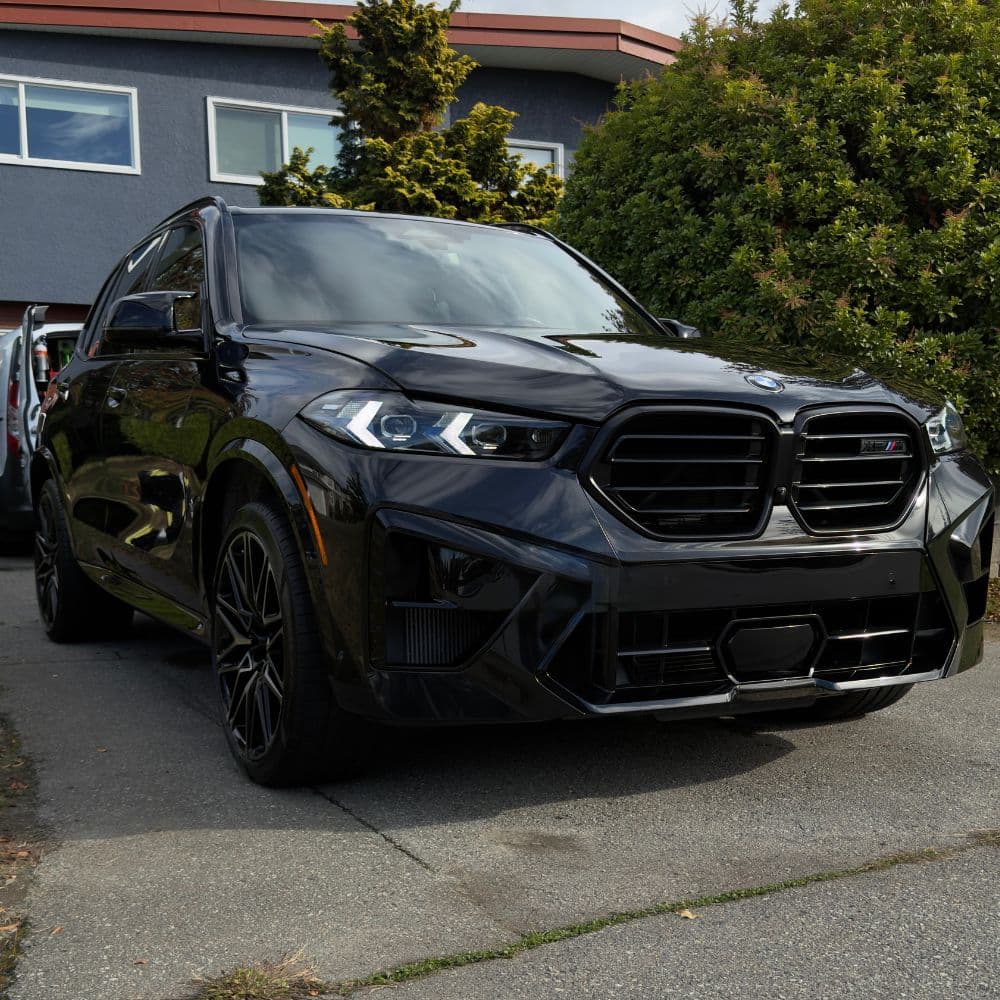
| Paint in good shape, keeping the car, want winter washing to actually work | System X® Crystal+ or Pro+ — From $1,119 |
| Want longer protection on a vehicle you're keeping indefinitely | System X® Max G+ — From $1,619 |
| Swirls under a low-angle light that you want fixed before protecting | Correction plus coating — quoted together once we've seen the paint |
| Chips through to bare metal on the leading edges | Touch those up first, then coat |
| Bubbling or crusty paint at the arch lips or rocker seams | Not us — body shop. Rust is already under the paint |
Quick answers
How much is a ceramic coating in Maple Ridge?
From $1,119 for the 2-year System X Crystal+, up through the 6-year and lifetime tiers. No travel charge in Maple Ridge or Pitt Meadows.
Can you apply a ceramic coating in November in Metro Vancouver?
Yes. We work under a portable canopy in your driveway and schedule around dry windows in the forecast. It's slower to book in winter than in July, so earlier is better.
Does a ceramic coating stop road salt damage?
Not by itself. What it does is stop the salt film bonding to your paint, so a winter wash actually removes it instead of smearing it around. It doesn't protect the underside of the vehicle and it doesn't protect a stone chip.
Is it too late to coat a car once road brine has started?
No, but the prep gets longer, because the paint has to be fully decontaminated first and a car driving a brined highway daily keeps re-contaminating.
How do I know if my paint needs correction before a coating?
Hold a phone light nearly flat against a panel in the dark and sight across it. A web of fine circular scratches means swirl marks, and correction is the honest answer before protection goes on top.
More on what drives a correction number is in the paint correction cost guide.
How to book
- Call or text (778) 656-2947, or request a quote on the site.
- Tell us the vehicle and what the flashlight test showed.
- We confirm a date against the weather and an address.
- We show up with water, equipment and a canopy, and the coating cures in your driveway.