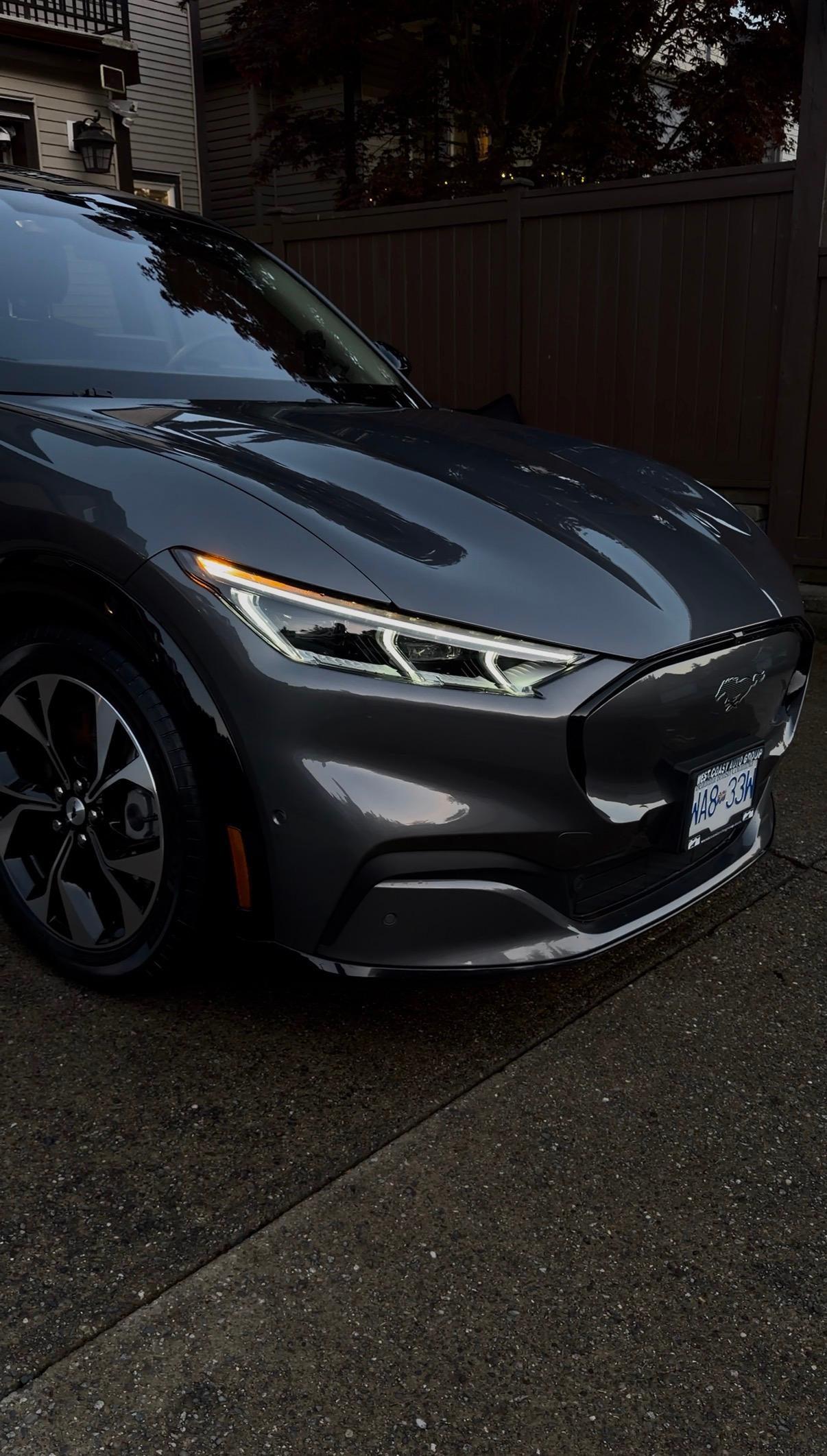
A fair number of people in the Tri-Cities try to move a vehicle in the last six weeks of the year. Some are getting out from under a payment before January, some want the money, and some are buying something with winter tyres already on it and need the old one gone first.
If you search for whether detailing helps resale, you'll find a lot of pages claiming a detail adds one or two thousand dollars to a sale price. That number is made up. Nobody has a figure worth quoting, and we're not going to invent one to sell you a package.
Here's the honest mechanism instead, which is more useful anyway. A clean car doesn't sell for more than it's worth. It stops getting discounted below what it's worth. This post covers what buyers in a private sale actually react to, a check you can do on your own car in five minutes, and where the line is. One thing stated plainly up front: we clean and polish. We don't fix dents, rust, cracked glass or anything mechanical, and a detail will not paper over a bad vehicle history report. See our interior detailing page or full pricing for what we actually do.
What's Actually Happening
Buyers price risk, not dirt. A filthy interior doesn't read as 'this needs vacuuming.' It reads as 'this person didn't maintain anything,' and that changes what a buyer assumes about the service history and the timing belt, not just the carpet.
Your listing competes as a thumbnail. On Marketplace and AutoTrader the first round is won or lost at about 400 pixels wide. A dirty car in a photo looks like a cheaper car, regardless of what it is.
Anything a buyer can point at becomes an opening offer. Someone who finds three obvious things has a reason to open two thousand below asking. Remove the obvious things and they have to start near your number instead.
Time on market costs real money. Every extra week is another week of insurance and payments, and asking prices slide the longer a listing sits. Selling in five days instead of five weeks is often worth more than the price difference people negotiate over.
A trade-in appraiser is calculating reconditioning cost. They're estimating what it costs to make the car lot-ready and subtracting it. That subtraction is a real line item on their side of the deal.
What Buyers Actually Look At
Not what you'd expect, and not evenly.
The steering wheel. A shiny, slick wheel is the single strongest 'high mileage' signal there is, and buyers read it before they read the odometer.
The driver's seat bolster, the part everyone slides across getting in.
The cup holders and centre console, which is where buyers put their hand without thinking about it.
The door jambs. People open the door and look at the jamb. It's where the car's real condition lives, because nobody cleans it.
The wheel faces and tyre sidewalls, which carry more weight in photos than the paint does.
The engine bay. Plenty of buyers open the hood without being able to interpret much of what they're looking at. Tidy still reads as maintained.
A Five-Minute Check
The point of this exercise is to see your own car the way somebody who's never sat in it does.
Photograph it and then look at the photo, not the car. Park where you'd shoot the listing, stand ten feet back and take one picture on your phone. The camera flattens everything and shows you what you've stopped noticing after three years of driving it.
Sit in the passenger seat for sixty seconds. You almost never sit there. From that seat you'll see the dash top, the glovebox surround and the A-pillar exactly as a buyer does on a test drive.
Grip the steering wheel firmly, then look at your palm. That's the test, and most people are surprised by it.
Open all four doors and look at the jambs. Then look at the sills you step over.
Open the hood, close it, then open the trunk or hatch. Both get opened during a viewing and neither gets cleaned before one.
If you do only one of those, do the first. The photo is the thing that decides whether anybody comes to see the car at all.
Shoot the Photos on a Grey Day
This is worth knowing because most people get it backwards, and in late November it works in your favour.
Overcast light is better for car photos than sunshine. Direct sun blows out the highlights on a hood, throws hard reflections across every panel and makes swirl marks and light scratches as visible as they ever get. Flat grey cloud is a giant diffuser — it's the light car photographers build studios to imitate, and Metro Vancouver gives it away for free for five months of the year.
Two practical limits. Shoot when the paint is dry, because drying water spots photograph far worse than a bit of dust. And the sun is now down around 4:15, so your usable window in the Tri-Cities is roughly nine to three. If you're planning to list on a Sunday night, the photos need to happen Sunday afternoon.
What You Can Do This Week
Clean the wheels properly, with a brush, into the barrels. It's the highest-return twenty minutes available to you and it changes the photos more than washing the paint does.
Empty the car completely, including the glovebox, the door pockets and the centre console. Buyers open all three.
Wipe the wheel, shifter and door handles with an interior cleaner rather than a dry cloth, because the problem there is oil from hands.
Put the service records in a folder and have it in the car for the viewing.
Replace the wiper blades if they streak. They're cheap, and on a rainy Tri-Cities test drive they're the first thing a buyer experiences.
All of that improves the photos and the first impression. None of it lifts ground-in staining out of upholstery, removes swirl marks from paint or clears a yellowed headlight — those three are what make a car photograph as older than it is, and they don't respond to a wash.
When It Needs a Professional
A wash and a vacuum are enough. If the car is newer, reasonably low kilometres, already kept clean and you're selling to someone you know, you don't need to pay anybody. Spend the Saturday morning on it yourself.
It's worth a full detail. If the car is five or more years old, if kids or pets or smokers have been in it, if you're listing privately at a number you actually want to hold, or if you're trading in where reconditioning gets deducted, this is the case where paying someone changes the outcome.
It's past us. Dents, rust, a cracked windshield and anything mechanical are not detailing work. Seat bolsters worn through to the foam, split leather and cigarette burns are auto upholstery. And nothing we do affects a vehicle history report, so if the car has a story on its record, price it accordingly and be upfront with buyers.
What a Full Detail Visit Does
We come to you anywhere in the Tri-Cities — Coquitlam, Port Coquitlam and Port Moody. Driveway, office lot or building parkade, and we bring water, equipment and lighting, which matters in November when it's dark by late afternoon.
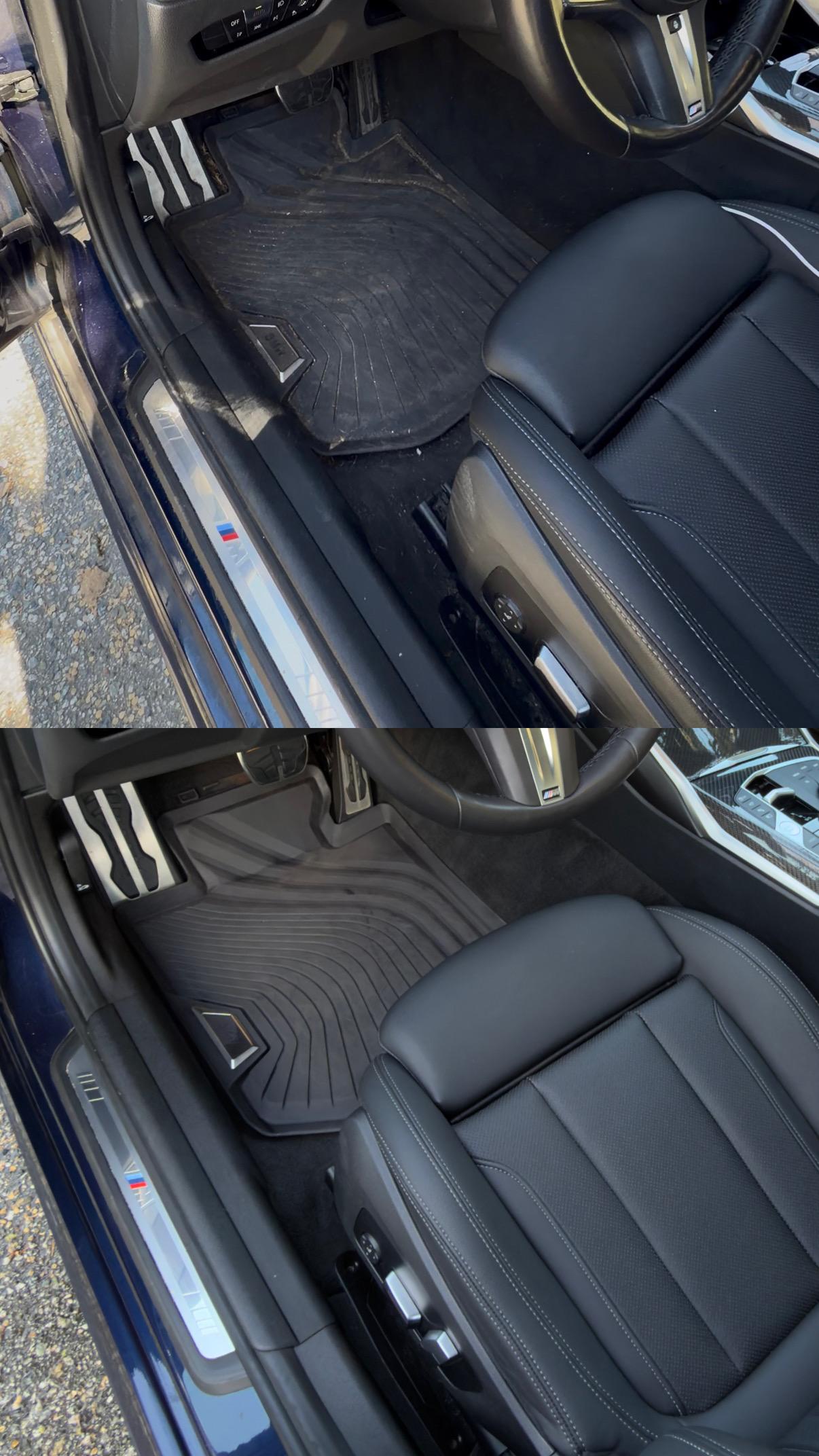
The Gold full detail is interior and exterior together, which is the right package before a sale because buyers judge both. Exterior gets a decontamination wash, wheels and tyres cleaned and dressed, and paint protected. Interior gets fully emptied, vacuumed into the seat rails and crevices, surfaces cleaned, glass done inside and out, and the jambs detailed. Several hours depending on size and condition.
| What you're seeing | Best fit |
|---|---|
| Newer car, already clean, selling to someone you know | Wash and vacuum it yourself |
| Private listing, five-plus years, want the photos to carry it | Gold full detail — From $300 |
| Trading in and want the recon deduction minimized | Gold full detail — From $300 |
| Paint looks dull or chalky in photos no matter how clean it is | Add paint correction — priced separately |
| Headlights look yellow and age the car ten years | Add headlight restoration — priced separately |
| Seat bolsters worn through, split leather, burns | Not us — auto upholstery |
| Dents, rust, cracked windshield | Not us — body shop or glass shop |
Quick Answers
How much does a full detail cost before selling a car in the Tri-Cities?
The Gold full detail is From $300, depending on vehicle size and condition. There's no travel charge in Coquitlam, Port Coquitlam or Port Moody.
Will detailing a car actually get me more money when I sell it?
It won't raise what the car is worth. What it does is remove the reasons a buyer opens low and shorten how long the listing sits. Both show up in the final price, but neither is a number anybody can promise in advance.
Do I need paint correction before selling my car?
Usually not. Correction makes sense when dull or swirled paint is clearly costing you in listing photos on an otherwise strong car. For most private sales a full detail is the right spend. Our paint correction cost guide walks through when it's worth it.
How long before a viewing should I book a detail?
A day or two ahead is ideal, so the listing photos get shot while the car is at its best and it isn't sitting for a week before anybody sees it.
Can a mobile detail be done in the rain?
Yes. We work through Metro Vancouver winters and bring cover. Scheduling around a dry window matters for the photo session, not for the detail itself.
If you're listing something in the next few weeks, book the detail for a day or two before you take the pictures. That ordering is most of the benefit, and people get it the wrong way round constantly.
Get in touch → We're mobile across Coquitlam and the rest of the Tri-Cities. Call or text (778) 656-2947. You can see before and afters in the gallery.